
Sauces & Condiments
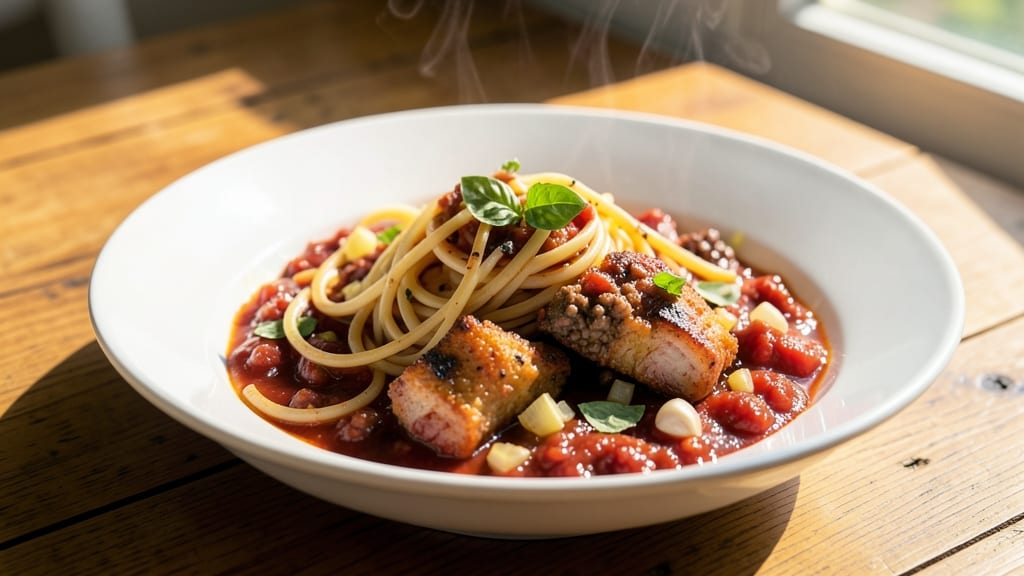
This authentic spaghetti meat sauce transforms a simple weeknight dinner into a taste of Italy with just a few key techniques. The secret lies in slow-simmered tomatoes and properly browned meat—no shortcuts, no bottled sauces, just deep, rich flavor built from scratch.
I've perfected this recipe over years of testing, ensuring every bite delivers that classic Italian restaurant experience at home.
What sets this sauce apart is the balance of tomato depth and herb harmony—fresh basil, oregano, and garlic work together to create layers of flavor that develop as it simmers.
The meat (a mix of ground beef and Italian sausage) browns beautifully in the pot, releasing rich juices that form the sauce's foundation. This isn't just a sauce; it's a labor of love that elevates humble spaghetti into something extraordinary.
The result is a deep-red sauce with tender meat pieces suspended in a velvety tomato base, perfectly clinging to al dente spaghetti. Each forkful delivers that perfect harmony of acidity, umami, and aromatic herbs.
The aroma alone will have everyone gathering at the table, and the taste? Well, it's the kind of dish that makes homemade cooking feel like a true accomplishment.
Whether you're serving this for a family dinner or impressing guests, this recipe delivers restaurant-quality results with simple, approachable steps. The key is patience—letting the sauce develop its full flavor means waiting, but the reward is worth every minute. Let's get started on creating your perfect spaghetti meat sauce.
Ingredients for authentic spaghetti meat sauce
Sixteen ingredients. One unforgettable sauce. The kind that makes homemade taste like Italy.
| Ingredient | Amount | Notes |
|---|---|---|
| Ground Beef (80% lean) 🥩 | 1 ½ lb | Italian-style blend preferred |
| Italian Sweet Sausage 🌭 | 1 lb | Casings removed, crumbled |
| San Marzano Tomatoes 🍅 | 28 oz | Canned, crushed by hand |
| Extra-Virgin Olive Oil 🫒 | ½ cup | For browning meat |
| Yellow Onion 🧅 | 1 whole | Finely chopped |
| Garlic Cloves 🧄 | 6 cloves | Minced, fresh preferred |
| Fresh Basil Leaves 🌿 | ½ cup | Packed, stems removed |
| Dried Oregano 🍃 | 1 tbsp | Italian or Mediterranean blend |
| Red Wine (optional) 🍷 | ½ cup | Bold dry red like Chianti |
| Beef Broth 💧 | 1 cup | Low-sodium preferred |
| Tomato Paste 🍅 | 2 tbsp | Smooth, not chunky |
| Kosher Salt 🧂 | 1 ½ tsp | Diamond Crystal preferred |
| Freshly Ground Black Pepper 🌶️ | ½ tsp | Cracked peppercorns preferred |
| Spaghetti 🍝 | 1 lb | Al dente preferred |
| Parmesan Cheese 🧀 | ½ cup | Freshly grated from block |
The tomatoes are non-negotiable—San Marzano is the gold standard, but any high-quality canned tomatoes work. I grab mine from Trader Joe's or Whole Foods bulk bins when they're on sale—no watery, mushy cans. The meat mix is where the magic happens: Italian sausage adds depth, while ground beef keeps it rich. If you can't find Italian sausage, mild chorizo or even regular sausage works in a pinch. The fresh basil? Buy extra—half goes in the sauce, half gets torn over the top at the end. That aroma alone sells the dish.
No red wine? Substitute beef broth with a splash of balsamic vinegar—it mimics the acidity. Dried oregano is fine, but fresh oregano or thyme adds complexity. The tomato paste can be skipped if you're using really ripe tomatoes, but it's worth the extra minute to build that deep umami base. For the onions, yellow or red both work—just make sure they're sweet, not bitter. The garlic? Freshly minced is non-negotiable for that authentic flavor, but if you're in a rush, garlic powder at half the amount gets you close. And if you're wondering about the wine—Chianti or Sangiovese are my go-tos, but any bold dry red works.
This sauce tastes even better the next day—plan ahead. Store in an airtight container in the fridge for up to 5 days, or freeze for 3 months in portions. I always make extra because it disappears fast. The spaghetti? Cook it al dente—it'll finish cooking in the sauce. And that Parmesan? Grate it yourself—pre-grated gets clumpy. Save the stems from the basil, dry them, and you've got free seasoning for next time.
Why You'll Love This Recipe
- No-Chop Struggle: I swear by this—just dice that onion while the sausage browns, no knife skills required. The San Marzano tomatoes handle the rest, and honestly? You’ll forget you ever dreaded chopping.
- Sweet Heat Magic: That Italian sausage? It’s the MVP—fennel and garlic sing while the beef stays rich. The tomatoes caramelize into a glossy, tangy sauce that clings to every strand of spaghetti like it’s been simmering all day.
- Leftovers That Shine: This sauce begs to be reheated—better the second day, if you ask me. I freeze half for lazy Mondays, then thaw it straight into a quick pasta or over grilled cheese. (Yes, even on a Tuesday night.)
- Budget-Friendly Feast: Ground beef and sausage stretch to feed four for under $15, and the San Marzano cans last forever. It’s the kind of meal where you’re the hero, not the grocery bill—especially when you’re doubling it for meal prep.
Step-by-step instructions for authentic spaghetti meat sauce
This is how Nonnas make it—rich, layered flavors that build slowly over time.
Brown the Meats for Deep Flavor
Heat a large Dutch oven or deep skillet over medium-high heat. Add ½ cup extra-virgin olive oil and let it shimmer for 30 seconds. Working in batches, add the 1.5 lb ground beef (80% lean) and 1 lb Italian sweet sausage, breaking them apart with a wooden spoon. Let the meat cook undisturbed for 3-4 minutes until it releases from the pan and turns deep brown—this is where all the flavor starts.
I don't stir constantly here. Let those browned bits (fond) build up—they'll dissolve later and give your sauce depth. If the pan gets too crowded, push the meat to one side and let the oil heat up again before adding the next batch. Once fully browned, transfer the meat to a plate using a slotted spoon, leaving all that golden fond behind.
Sauté Aromatics Until Fragrant
With the meats removed, reduce heat to medium and add the finely chopped yellow onion to the same Dutch oven. Cook for 5-6 minutes until softened and just starting to caramelize at the edges—that sweetness will balance the acidity of the tomatoes. Add the minced garlic cloves and cook for another 30 seconds until you can smell that pungent aroma filling your kitchen.
Here's the thing—don't let the garlic burn. It turns bitter fast. If it starts to darken, remove the pan from heat for 10 seconds and stir. Now add the 2 tbsp tomato paste and stir vigorously for 1 minute to coat everything in that rich, concentrated flavor. This step builds the sauce's foundation.
Deglaze and Simmer the Tomato Base
Pour in the ½ cup red wine (optional) and scrape up every last bit of browned fond from the bottom of the pan. Let it simmer for 2-3 minutes until reduced by half—you want the alcohol to cook off completely. Add the 28 oz San Marzano tomatoes (crushed by hand) and 1 cup beef broth, then stir in the 1.5 tsp kosher salt and ½ tsp freshly ground black pepper.
Bring to a gentle simmer, then reduce heat to low. Partially cover and let it cook for 45-60 minutes, stirring occasionally. You're looking for a sauce that's thick enough to coat the back of a spoon but still has body. If it gets too thick, add 2-3 tablespoons water to loosen it. The tomatoes should break down completely, creating that velvety, deep-red texture that defines authentic Italian meat sauce.
Finish with Herbs and Rest
After the sauce has thickened, stir in the 1 tbsp dried oregano and ½ cup fresh basil leaves, reserving a few leaves for garnish. Taste and adjust seasoning—you might need a pinch more salt or pepper. Now add the browned meats back into the sauce and let everything simmer together for another 10 minutes to meld the flavors.
Remove from heat and let the sauce rest for 15-20 minutes. This resting period allows the flavors to fully develop and the sauce to thicken slightly. I know it's tempting to serve it immediately, but trust me—this step makes all the difference. The sauce will be even more flavorful and cohesive when you're ready to serve.
Serve Over Al Dente Spaghetti
While the sauce rests, cook the 1 lb spaghetti in salted boiling water until al dente (about 1 minute less than package instructions). Reserve ½ cup pasta water before draining. Toss the drained spaghetti with the meat sauce, adding pasta water as needed to create the perfect clingy consistency.
Divide the spaghetti among plates and top with the reserved fresh basil leaves and ½ cup freshly grated Parmesan cheese. The sauce should be rich, slightly thick, and packed with layers of meaty, herby, and tomato flavors. Serve immediately with crusty bread to soak up every last drop of that authentic Italian goodness.
Pro Tips For Making Authentic Spaghetti Meat Sauce
- CRACK THE SAUSAGE FIRST: Cut those Italian sweet sausages lengthwise, then slice into half-moons—not quarters. This keeps the seasoning and fat evenly distributed in every bite, so you’re not left with dry, flavorless chunks. (Yes, it looks messy, but your sauce will taste like it came from a trattoria.)
- SWEAT THE ONION LOW: Ditch the high heat—cook that onion in olive oil over medium-low until it’s a deep golden, almost caramelized color, not browned. I learned this the hard way when my sauce tasted bitter; patience here makes the whole dish richer.
- BURST THE TOMATOES: Before crushing San Marzano tomatoes, give them a quick blanch in boiling water for 30 seconds, then ice bath. This makes peeling and crushing them effortless, and the sauce stays silky instead of chunky. (Your future self will thank you.)
- REST THE MEAT: After browning the beef and sausage, turn off the heat and let the meat sit for 5 minutes under foil. This lets the juices redistribute so they don’t steam out when you add tomatoes. Skipping this step means a drier sauce—don’t be that cook.
Essential equipment for great authentic spaghetti meat sauce
Dutch Oven
A heavy-bottomed Dutch oven is my go-to pot for this recipe—it distributes heat evenly and handles the long simmer beautifully. I use a Le Creuset 5.5-quart because it retains heat well and has a tight-fitting lid to trap steam.
If you don't own one, a stainless steel stockpot with a lid works too, though it may require slightly more attention to prevent scorching. 🔥
Wooden Spoon
A long-handled wooden spoon is essential for stirring the sauce without scratching the pot. I prefer olive wood because it's durable and gentle on nonstick coatings if you ever need to use one.
Avoid metal utensils—they can react with acidic ingredients and leave a metallic taste. For browning meat, I use a heat-resistant silicone spatula to scrape up all those flavorful browned bits.
Chef's Knife
Invest in a sharp 8-inch chef's knife for chopping onions and mincing garlic—it makes prep faster and safer. I use a Wüsthof Classic because it holds its edge well. For garlic, I press the knife blade flat and rock it back and forth for even mincing.
A garlic press works too, but it can release more moisture, which we don't want in our sauce. Keep your knife sharp with a honing steel before each use.
Measuring Tools
Precision matters in Italian cooking, so use a stainless steel measuring spoon set for herbs and spices. For liquids, a liquid measuring cup with markings is a must—San Marzano tomatoes and broth need exact amounts.
I also keep a digital kitchen scale handy for weighing meat, though volume measurements work fine for this recipe. A fine-mesh strainer comes in handy if you prefer smoother tomato sauce—just strain the crushed tomatoes before adding them.
Pasta Tools
For perfect al dente spaghetti, use a long-handled pasta fork to test doneness. I also recommend a pasta server for serving—it holds the strands together beautifully. A colander with large holes prevents clogging when draining pasta.
Pro tip: Save ½ cup pasta water in a small measuring cup before draining—it's liquid gold for adjusting sauce consistency. A microplane is perfect for grating fresh Parmesan if you don't own a dedicated cheese grater.
Optional Upgrades
For next-level results, consider a canning funnel to crush tomatoes neatly and a mortar and pestle for grinding fresh black pepper. A laser thermometer helps monitor meat temperatures if you're concerned about overcooking.
I also keep a small bowl nearby for reserving fresh basil leaves—it makes garnishing effortless. The right tools might seem like an investment, but they'll elevate every Italian dish you make. 💡
Nutrition facts
Frequently asked questions
Can I use ground turkey instead of beef for this recipe?
Yes, but with adjustments! Ground turkey works well, but use 93% lean to prevent dryness and add 1 tbsp olive oil to the pan when browning. For extra richness, mix turkey with 2 oz ground pork or ½ cup finely chopped pancetta. The sauce will be slightly lighter, so add 1 extra tablespoon tomato paste to compensate.
Why does my homemade meat sauce taste different from restaurant versions?
Restaurant sauces often use slow-cooked techniques (like braising) and high-quality ingredients you might not have at home. The key differences are: longer simmering time (2+ hours), homemade tomato paste, and specific herb ratios. Try adding 1 tsp sugar to balance acidity and simmer uncovered for 30 extra minutes to deepen flavors.
How can I make this sauce ahead of time?
This sauce tastes even better the next day! Cook it completely, then refrigerate in an airtight container for up to 5 days. For freezing, portion into ziplock bags, remove air, and freeze for 3 months. Thaw overnight in the fridge, then reheat gently on low heat with 1-2 tbsp pasta water to restore texture. Never microwave—it breaks down the sauce's structure.
What's the best way to fix a sauce that's too thin or too thick?
For thin sauce, simmer uncovered for 10-15 minutes to reduce, or mix 1 tbsp cornstarch with 2 tbsp cold water and stir in slowly. For thick sauce, add 2-3 tbsp pasta water at a time while stirring constantly. Pro tip: If using pre-made tomato sauce, add 1 tbsp tomato paste to thicken during simmering.
Can I make this vegetarian?
Replace the meat with 1 lb mushrooms (cremini or portobello) and ½ cup lentils (cooked). For umami depth, add 1 tbsp soy sauce or 1 tsp miso paste with the aromatics. Use vegetable broth instead of beef broth and add ½ cup white beans for creaminess. The sauce will have a different texture but still pack bold flavors!