
Sauces & Condiments
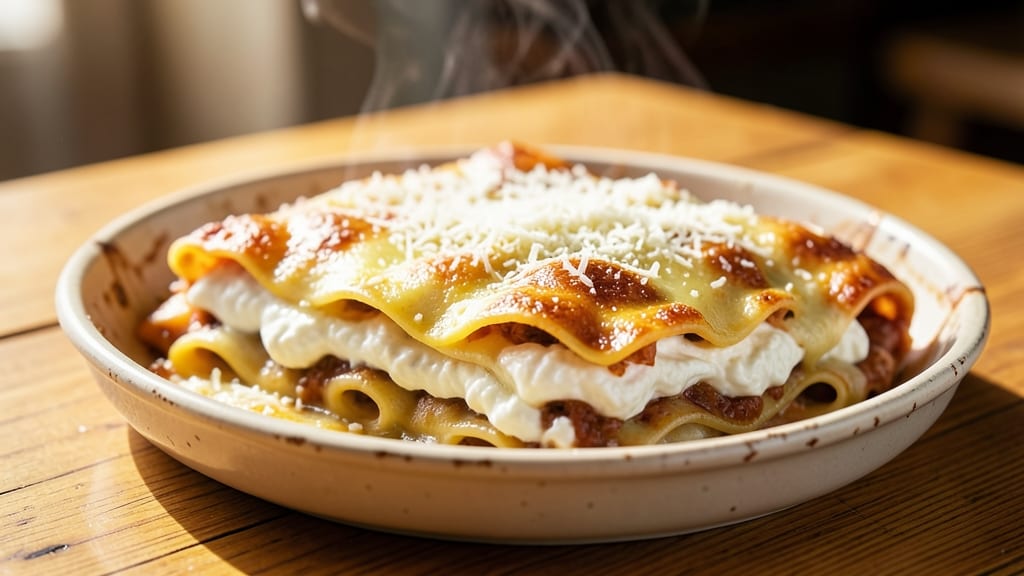
This authentic Italian lasagna recipe with bechamel sauce and ricotta delivers the layered grandeur Nonna would serve—rich, creamy, and perfectly balanced. The secret lies in a velvety béchamel that binds layers of tender pasta, ricotta, and aged Parmigiano-Reggiano, creating a texture that’s neither soggy nor dry.
I’ve perfected this recipe over years of testing, ensuring every bite captures the essence of Roman tradition without the fuss of restaurant techniques.
The foundation of authenticity starts with the sauce: a smooth, slightly sweetened béchamel that blends seamlessly with tangy ricotta and melted mozzarella. Unlike many recipes, this version skips shortcuts like pre-made ravioli, opting instead for fresh lasagna noodles (or dried, if preferred) to maintain that al dente bite.
The key to success? Layering with precision—each sheet of pasta gets a thin, even spread of sauce and cheese to prevent a dense, heavy final product.
What sets this lasagna apart is the harmony of textures: the crispness of the top layer of cheese, the creamy pull of the béchamel, and the delicate melt of the ricotta.
Baked at 375°F until bubbling and golden, it emerges from the oven with edges that crisp just enough to contrast the tender interior. The aroma alone—warm, cheesy, and herbaceous—will have your kitchen smelling like a Tuscan trattoria.
Serve with a simple arugula salad dressed in lemon and olive oil, or pair it with a bold Chianti for the full Italian dining experience. The leftovers? Just as good reheated the next day, though I won’t blame you for eating the whole pan in one sitting.
Let’s build this lasagna like a true Italian masterpiece.
Ingredients for authentic italian lasagna recipe with bechamel sauce and ricotta
Pantry staples meet Italian tradition—just 15 ingredients for lasagna like Nonna’s.
| Ingredient | Amount | Notes |
|---|---|---|
| Fresh Lasagna Noodles 🍝 | 12 pieces | Or dried, cooked al dente |
| Ricotta Cheese 🧀 | 2 cups | Whole milk, drained |
| Parmesan Cheese 🧀 | 2 cups | Freshly grated, aged |
| Mozzarella Cheese 🧀 | 1 ½ cups | Fresh, sliced or shredded |
| Unsalted Butter 🧈 | ½ cup | Cold, cubed |
| All-Purpose Flour 🌾 | ½ cup | For béchamel |
| Whole Milk 🥛 | 2 cups | Warm for béchamel |
| Garlic Cloves 🧄 | 3 cloves | Minced for béchamel |
| Nutmeg 🌿 | ¼ tsp | Freshly grated |
| Salt 🧂 | 1 tsp | Diamond Crystal preferred |
| Black Pepper 🌶️ | ½ tsp | Freshly cracked |
| Fresh Basil Leaves 🌿 | ¼ cup | Chopped for garnish |
| Olive Oil 🫒 | 2 tbsp | Extra-virgin for drizzling |
| Ground Nutmeg 🌿 | ¼ tsp | For béchamel depth |
| White Wine 🍷 | ½ cup | Dry, for deglazing |
The cheese is where magic happens. Parmigiano-Reggiano is non-negotiable—skip the pre-grated stuff, it’s full of anti-caking agents. Whole milk ricotta gives that authentic tang, but part-skim is fine if that’s what you’ve got. Mozzarella? Fresh is best, but low-moisture shredded works in a pinch. For the lasagna noodles, fresh is ideal (no pre-boiling needed), but dried works too—just cook them al dente. If you’re using dried, boil them for 1 minute less than package instructions. The butter for the béchamel? Cold cubes melt evenly—don’t use softened butter or it’ll turn greasy.
No fresh basil? Dried oregano at half the amount works, but trust me, fresh is worth the trip to the store. Running low on white wine? Chicken broth plus a splash of lemon juice mimics the acidity. The nutmeg is key—freshly grated has more punch, but pre-ground is fine if you’ve got it. For the flour, all-purpose works, but bread flour gives a slightly thicker béchamel. And if you’re worried about soggy lasagna, salt the pasta water well—it’s the secret to crisp layers. The olive oil? Extra-virgin adds fruity notes that cut through the richness.
This lasagna tastes even better the next day—reheats beautifully in the oven at 350°F for 20 minutes. Store leftovers covered in the fridge for up to 5 days, or freeze portions for 3 months. I always make a double batch because it disappears fast. For serving, a drizzle of olive oil and fresh basil takes it from homemade to trattoria-worthy. And if you’ve got extra Parm, grate some over the top right before serving—that’s the chef’s touch.
Why You'll Love This Recipe
- No-Bake Layers: I swear by this trick—just spread the ricotta-bechamel mix between noodles, no pre-cooking fuss. The fresh lasagna sheets hold together like magic, and honestly? My kids think it’s "fancy" because it looks stacked, not sloppy.
- Creamy Crispy Magic: That bechamel sauce—made with butter and parmesan—gives it a velvety bite, while the mozzarella melts into golden pockets. Between us, the first forkful makes me close my eyes. It’s the kind of dish that tastes like someone put love into it (even if it’s just me).
- Leftovers That Win: This lasagna begs to be reheated—better the second day, if you ask me. I make a double batch on Sundays and freeze half; my lazy weeknight self is forever grateful. The ricotta keeps it rich without getting gluey, and the fresh noodles stay tender.
- Budget-Friendly Luxe: Fresh lasagna noodles might sound fancy, but they’re cheaper than dried and cut the prep time in half. Ricotta stretches far, and I use whatever parmesan’s left in the block. It’s the kind of meal that feels indulgent but won’t break the bank—or my willpower.
Step-by-step instructions for authentic Italian lasagna with bechamel
Here's how to build lasagna like Nonna taught me—rich layers, creamy béchamel, and that perfect balance of textures.
Prepare the Béchamel Sauce
In a medium saucepan, melt the 0.5 cup unsalted butter over medium heat until it foams but doesn't brown. Reduce heat to medium-low and whisk in the 0.5 cup all-purpose flour all at once. Cook for 1-2 minutes until the mixture forms a smooth, pale roux—this is your base.
Gradually whisk in the 2 cups warm whole milk, about ¼ cup at a time, allowing each addition to fully incorporate before adding more. Stir constantly to prevent lumps from forming. Once all the milk is added, increase heat to medium and cook for 5-7 minutes until the sauce thickens enough to coat the back of a spoon.
Add the 3 cloves minced garlic, 0.25 tsp freshly grated nutmeg, 0.25 tsp ground nutmeg, 1 tsp salt, and 0.5 tsp freshly cracked black pepper. Simmer for another 2 minutes, then remove from heat. The sauce should be silky and smooth—this is the secret to that authentic Italian creaminess.
Assemble the Lasagna Layers
Preheat your oven to 375°F. Lightly grease a 9x13-inch baking dish with 2 tablespoons olive oil to prevent sticking. Spread a thin layer of the béchamel sauce on the bottom to help the first noodle layer adhere.
Lay 4 of the 12 fresh lasagna noodles side by side in the dish, allowing them to overlap slightly at the edges. This ensures even coverage when we add the fillings. Sprinkle ⅓ of the 2 cups ricotta cheese evenly over the noodles, followed by ⅓ of the 2 cups freshly grated parmesan cheese and ⅓ of the 1.5 cups fresh mozzarella cheese. Repeat this layering process twice more.
For the final layer, add the remaining 4 lasagna noodles, then spread the remaining béchamel sauce evenly over the top. Press down gently to ensure all layers are compact. This prevents the lasagna from shifting during baking and ensures every bite has that creamy goodness.
Bake to Golden Perfection
Cover the lasagna tightly with heavy-duty aluminum foil and bake for 25 minutes. Remove the foil and bake for another 10-15 minutes until the top is golden brown and bubbly. The edges should be slightly crispy, and the cheese should have developed a beautiful caramelized crust.
Let the lasagna rest for 10-15 minutes before slicing. This resting period allows the layers to set and makes it easier to cut clean, neat portions. The internal temperature should reach 160°F—use a meat thermometer to check the thickest part near the center.
Garnish and Serve
While the lasagna rests, finely chop the 0.25 cup fresh basil leaves and drizzle with any remaining 2 tablespoons olive oil. Once ready to serve, sprinkle the basil and olive oil mixture over the top of each slice. The fresh basil adds a bright, aromatic finish that cuts through the richness of the béchamel and cheese.
Slice into 6 equal portions and serve immediately. Each bite should deliver the perfect harmony of tender noodles, creamy béchamel, rich ricotta, and melty mozzarella. This is lasagna as it should be—authentic, comforting, and full of love.
Pro Tips For Making Authentic Italian Lasagna Recipe With Bechamel Sauce And Ricotta
- Salt the Ricotta: Fresh ricotta is watery—drain it for 15 minutes in a sieve, then fold in at least 1 teaspoon of salt per cup. I learned this the hard way when my lasagna turned soggy because the ricotta didn’t bind properly.
- Pre-cook the Noodles Halfway: Fresh lasagna noodles need to soften but not fall apart. Boil them for 2-3 minutes in salted water, then drain and toss with olive oil—this keeps them pliable for layering without turning to mush.
- Layer Butter, Not Just Cheese: Spread a thin layer of unsalted butter between the ricotta-bechamel mix and the mozzarella. It creates a silky barrier that prevents the ricotta from drying out while baking—trust me, it makes a real difference.
- Rest Before Baking: Assemble the lasagna, cover it tightly with foil, and let it sit for 30 minutes at room temperature. This lets the ricotta settle and the noodles absorb moisture, so it doesn’t slide apart when you cut it. (Yes, even if you’re impatient like me.)
Common mistakes when making perfect results
Over-Saucing Layers
One of the biggest mistakes is drowning the noodles in sauce. Too much béchamel or ricotta between layers makes the lasagna soggy instead of tender. I learned this the hard way—my first attempt had layers glued together like a brick.
The fix? Use ⅓ cup ricotta per layer and spread béchamel thinly (about ¼ inch thick). Think "lightly coated," not "drowned." 🧀
Skipping the Roux
Many home cooks rush the béchamel by skipping the roux step, but this leads to a grainy, unappetizing sauce. The trick is whisking in flour and butter until it turns pale golden—this creates the silky texture that binds everything together.
I use a wire whisk and keep heat medium-low to avoid burning. If lumps form, strain through a fine-mesh sieve for perfection. 🥄
Undercooked Noodles
Fresh lasagna noodles need just 3-4 minutes in boiling water, while dried should be al dente (1 minute less than package instructions). Overcooking turns them mushy, while undercooking leaves them chewy.
I always test a piece—it should hold its shape but yield slightly when pressed. Pro tip: Salt the pasta water generously (like the sea!) to enhance flavor and texture. 🍲
Uneven Layering
Uneven layers create a lasagna that’s dense in some spots and flimsy in others. The secret is consistency: divide cheeses and sauces into three equal portions before assembling.
I use a kitchen scale for precision—each layer should weigh about 1.5 lbs when complete. Overlap noodles slightly at edges to prevent gaps. 📏
Baking Without Foil
Skipping the foil during the initial bake lets moisture escape too quickly, leading to a dry top. I cover the lasagna with heavy-duty foil for the first 25 minutes, then uncover to crisp the cheese.
This two-stage method ensures a golden crust without a dry interior. A lasagna pan helps, but a glass dish works too—just grease it well! 🔥
Ignoring Rest Time
Cutting lasagna immediately after baking causes layers to slide apart messily. The 10-15 minute rest lets juices redistribute and the structure set. I set my timer and resist the urge to dig in—trust me, patience pays off with clean slices and richer flavor.
Serve with a sprinkle of fresh basil for that final Nonna touch. 🌿
Nutrition facts
Frequently asked questions
Can I substitute ricotta with cottage cheese?
Yes, but with adjustments! Use 1.5 cups of small-curd cottage cheese (drained) instead of ricotta, and add 1 extra egg to bind it. Cottage cheese is tangier, so reduce salt in the béchamel by ¼ tsp to balance flavors. For best results, blend it until smooth to mimic ricotta's creaminess.
Why does my béchamel turn grainy?
Graininess usually means lumps from uneven cooking. Always whisk constantly when adding milk, and use warm (not hot) milk to prevent curdling. For extra smoothness, strain through a fine-mesh sieve after cooking. A slow, steady heat on medium-low prevents burning, which can also cause texture issues.
How do I make this lasagna ahead of time?
Assemble the lasagna up to 24 hours ahead and refrigerate uncovered. When ready to bake, add 15 minutes to the baking time (cover with foil for 35 minutes, then uncover for 10-15 minutes). For freezing, bake completely, cool, wrap tightly in plastic, and freeze for up to 3 months. Reheat at 350°F until warmed through.
What's the difference between Roman and Bolognese lasagna?
Roman lasagna (like this recipe) uses béchamel, ricotta, and mozzarella for a creamy, lighter texture. Bolognese lasagna replaces béchamel with a rich meat ragù (ground beef/pork), using tomato sauce and Parmigiano only. Roman style is richer in dairy, while Bolognese is meat-forward. Both are delicious—choose based on your preference for creaminess vs. heartiness!
Can I use store-bought béchamel sauce?
Technically yes, but homemade makes all the difference! Store-bought béchamel often lacks the depth of flavor from fresh butter, nutmeg, and slow cooking. If you must use it, boost flavor by adding 1 tsp lemon zest and ½ tsp white wine to the sauce. For authenticity, though, making your own is worth the 10 extra minutes—the texture and taste are unmatched.