
Sauces & Condiments
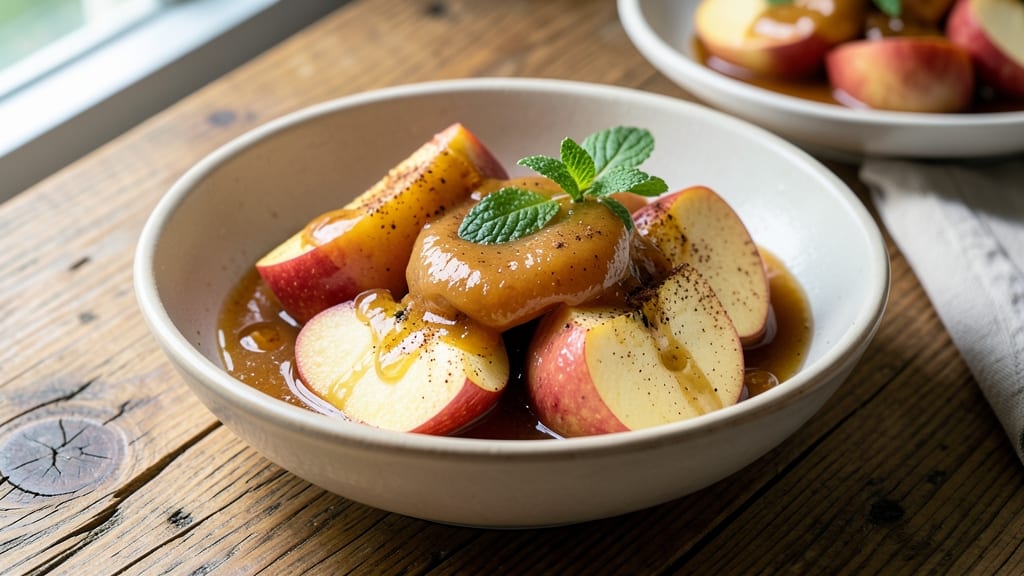
This applesauce recipe with unpeeled apples proves you don’t need peeling to create silky, flavorful sauce—just whole apples, water, and 15 minutes of stovetop time. The skins add subtle earthiness and fiber, while cinnamon and a touch of lemon brighten every spoonful.
I developed this method after realizing most recipes waste time peeling when the skins actually enhance texture and nutrition.
The beauty of this approach lies in its simplicity: no peeling, no fancy equipment, just a pot, apples, and a pinch of patience. You’ll simmer the apples until tender, then blend until smooth—no lumps, no fuss.
The result is a versatile sauce that works as a spread, topping, or even a healthy snack on its own. Slow cookers also work perfectly, letting the flavors meld deeper with minimal effort.
What sets this recipe apart is its adaptability. Skip added sugar for a naturally sweetened version, or boost warmth with extra spices like nutmeg or cardamom.
The sauce thickens as it cools, making it ideal for batch prep—just store it in the fridge for up to a week or freeze for months. No waste, no peels, just pure, flavorful simplicity.
Perfect for breakfast toast, yogurt bowls, or as a side for roasted meats, this applesauce delivers restaurant-quality results with pantry staples. Let’s make it—your taste buds (and time) will thank you.
Ingredients for applesauce recipe unpeeled apples
Eight simple ingredients transform whole apples into silky, spiced applesauce—no peeling required.
| Ingredient | Amount | Notes |
|---|---|---|
| Unpeeled Apples 🍎 | 4 medium | Mixed varieties for balance |
| Water 💧 | ½ cup | Enough to cover apples |
| Granulated Sugar 🍚 | ¼ cup | Adjust to taste (optional) |
| Ground Cinnamon 🍃 | 1 ½ tsp | For warmth (adjust to taste) |
| Lemon Juice 🍋 | 1 tbsp | Freshly squeezed for brightness |
| Maple Syrup 🍯 | 2 tbsp | Vegan sweetener alternative |
| Ground Nutmeg 🌿 | ¼ tsp | Optional for depth |
| Salt 🧂 | ¼ tsp | Enhances flavors |
Apples are the heart of this recipe, so pick a mix of varieties—sweet like Gala or Fuji, tart like Granny Smith, or a mix of Honeycrisp and Braeburn. Local markets or grocery store bins often have the best selection, especially in season. Avoid apples with bruises or soft spots, but don’t stress about perfect ones—the skins add texture. I usually buy organic apples if I’m making a big batch for the week, but conventional works too. If you’re using a slow cooker, grab a few extra apples—they shrink as they cook.
No sugar? Maple syrup or agave works perfectly—just reduce the water slightly since these are thicker. Short on cinnamon? Allspice or cardamom add a different kind of warmth, but stick to about half the amount. The lemon juice is key for brightness, so fresh is best—bottled won’t cut it. If you’re making this ahead, skip the lemon juice until serving to keep the applesauce from browning. For a naturally sweetened version, omit the sugar entirely and rely on the apples’ sweetness—just use riper apples.
Applesauce thickens as it cools, so stir in a splash of water if it’s too thick after blending. Store in an airtight container in the fridge for up to 1 week—it actually tastes better the next day as the flavors meld. For longer storage, freeze in ice cube trays or small jars. Thaw overnight in the fridge or reheat gently on the stovetop. I always make a double batch—one for breakfast toast, one for baking in muffins or oatmeal. The skins add fiber, so don’t skip them!
Why You'll Love This Recipe
- No-Peel Hassle: I swear by skipping the peel—it cuts my prep time in half. Just core, chop, and toss those skins in with the apples; they soften right into the sauce, adding a subtle earthy depth that’s actually better than store-bought.
- Cinnamon-Kissed Sweetness: That first spoonful of warm, spiced applesauce? Pure satisfaction. The cinnamon doesn’t just sit there—it blooms with the lemon juice, cutting through the sugar for a bright, cozy flavor that tastes like autumn in a jar.
- Leftover Goldmine: This sauce lasts forever in the fridge, and it only gets better over time. Spread it on toast, mix it into oatmeal, or even dollop it on roasted pork—it’s my go-to for lazy mornings or last-minute side dishes.
- Budget Magic: Apples are cheap, sugar’s a pantry staple, and you’re using the whole fruit—no waste. Honestly, it’s the kind of recipe where you’ll make a double batch just because it’s so dang economical and foolproof.
Step-by-step instructions for applesauce with unpeeled apples
Here's how to make rich, spiced applesauce without peeling—simple and full of natural goodness.
Core and Chop the Apples
Start by coring the 4 medium unpeeled apples using an apple corer or a small knife. Cut each apple into 8-10 even wedges—this ensures they cook uniformly. I like to leave the skin on for extra fiber and nutrients, but if you prefer a smoother texture, you can peel them now. The wedges should be about 1-inch thick for even cooking.
Place the chopped apples in a large saucepan with the 0.5 cup water. The water should just cover the bottom of the pan—this helps steam the apples and release their natural juices. If you're using a mix of varieties, like Honeycrisp and Granny Smith, you'll get a perfect balance of sweet and tart flavors. Give the apples a quick stir to distribute the water evenly.
Simmer Until Tender
Bring the apples and water to a gentle boil over medium-high heat. Once boiling, reduce the heat to medium-low and let the apples simmer uncovered. You're looking for 15-20 minutes of cooking time until the apples break down easily when pierced with a fork. Stir occasionally to prevent sticking, and add a splash of water if the pan gets too dry.
This is where the magic happens—the apples soften while keeping their natural sweetness. You'll notice the sauce thicken slightly as it cooks, and the aroma of warm apples will fill your kitchen. If the apples aren't quite tender after 20 minutes, just give them a few more minutes—they'll continue to break down as they cool.
Add Sweetness and Spices
Once the apples are tender, stir in the 0.25 cup granulated sugar, 1.5 teaspoons ground cinnamon, 0.25 teaspoon salt, 1 tablespoon lemon juice, 2 tablespoons maple syrup, and 0.25 teaspoon ground nutmeg. The lemon juice brightens the flavor, while the cinnamon and nutmeg add warmth. The sugar and maple syrup balance the natural tartness of the apples—adjust to taste if you prefer it sweeter or more tangy.
Let the mixture simmer for another 5-7 minutes over low heat, stirring occasionally. This allows the spices to infuse and the flavors to meld. You'll know it's ready when the sauce thickens slightly and smells irresistibly spiced. If the sauce is too thick, add a splash of water to reach your desired consistency.
Mash and Cool
Use a potato masher or fork to mash the apples to your preferred texture—some like it chunky, while others prefer it smooth. I usually leave it slightly chunky for a rustic feel. Taste and adjust the seasoning if needed. The applesauce should be sweet, spiced, and perfectly balanced.
Let the applesauce cool to room temperature before transferring it to a clean jar or container. If you're not serving it immediately, refrigerate it for up to 5 days or freeze it for up to 3 months. The flavors actually deepen as it sits, making it even more delicious the next day. Serve it warm with pancakes, oatmeal, or as a healthy snack on its own!
Pro Tips For Making Applesauce Recipe Unpeeled Apples
- CUT APPLES SMALLER THAN YOU THINK: I learned this the hard way—big chunks turn into mushy applesauce, even with gentle cooking. Aim for ½-inch dice; they’ll soften evenly without falling apart. (Yes, it takes a few extra minutes of chopping, but trust me on this.)
- USE COLD WATER FOR BALANCE: Start with ice water in your pot—it keeps the apples from steeping into a watery mess right away. After the initial simmer, you can add more hot water if needed, but this first step guarantees thicker, less diluted sauce.
- SIMMER, DON’T BOIL: After the apples soften, drop the heat to a bare simmer. Boiling turns applesauce into glue, and I’ve made that mistake enough times to know it’s not worth it. A gentle bubble keeps the texture smooth and the flavor bright.
- STIR IN CINNAMON LAST: Sounds weird, but it works: Add the cinnamon and sugar only in the final 5 minutes of cooking. This prevents the spices from overpowering or burning, giving you that fresh, warm aroma in every bite. (Your future self will notice the difference.)
Essential equipment for perfect results
Stovetop Essentials
You only need three basic tools for perfect stovetop applesauce: a large saucepan with lid (I use my 8-quart stainless steel Le Creuset—it’s durable and heats evenly), a wooden spoon (prevents scratching), and a potato masher (for texture control).
A fine-mesh strainer is optional if you prefer ultra-smooth sauce. Avoid nonstick pans—they can’t handle the prolonged simmering without warping. 🔥
Slow Cooker Magic
For hands-off cooking, a 6-quart slow cooker transforms this into a set-it-and-forget-it recipe. I love my Hamilton Beach Programmable—it maintains low heat (170°F) perfectly. Add the chopped apples, water, and spices, then cook on low for 6-8 hours or high for 3-4 hours.
The long cook time deepens the flavors without drying them out. Just mash before serving!
Blender for Silky Texture
A high-speed blender (like my Ninja BN601) turns chunky applesauce into velvety smoothness. After simmering, let the apples cool slightly, then blend in 1-cup batches with 2 tbsp water to thin.
For extra richness, add 1 tbsp Greek yogurt (vegan yogurt for plant-based versions). Pulse until completely smooth—no lumps! 💫
Storage Containers
Use glass jars with airtight lids (like Ball Mason jars) for fridge storage—they preserve freshness longer than plastic. For freezing, silicone ice cube trays work perfectly—just pop out individual portions.
Label with dates! I also keep a small glass jar in my pantry for quick breakfasts—it’s my go-to for oatmeal toppings.
Optional Extras
A fine-mesh strainer removes skins if you prefer no texture, while a microplane lets you zest fresh ginger or cinnamon sticks for extra aroma. For spice lovers, a mortar and pestle helps grind whole spices like cloves or star anise. Keep it simple, though—this recipe shines with just the basics!
Nutrition facts
Frequently asked questions
Can I use any apple varieties for this unpeeled applesauce?
A mix of varieties works best. Try combining sweet apples like Gala or Fuji with tart ones like Granny Smith or Honeycrisp. The balance creates perfect flavor. Avoid overly soft or bruised apples—they'll break down too quickly during cooking.
Why does my applesauce turn out too thick or too thin?
The consistency depends on cooking time and liquid ratio. If too thick, stir in 1-2 tablespoons water while warm. For thinner sauce, reduce cooking time by 2-3 minutes. The sauce will naturally thicken as it cools, so adjust before serving.
How do I prevent my applesauce from browning when stored?
Lemon juice is your best friend! Add it fresh when serving, or cover the surface with plastic wrap pressed directly against the sauce. For long-term storage, freeze in airtight containers. Browning is just oxidation—keeping air out solves the problem completely.
Can I make this applesauce without added sugar?
Yes, but choose sweeter apple varieties like Braeburn or Pink Lady. Use 1-2 tablespoons maple syrup or honey instead, or simply rely on the apples' natural sweetness. Tart apples may need a bit of extra sweetener—taste as you go!
What's the best way to reheat stored applesauce?
Gently reheat in a saucepan over low heat (160°F) with 1-2 tablespoons water to restore moisture. Microwaving works too—just heat in 30-second bursts while stirring. Never reheat to boiling, or it may separate.