
Sauces & Condiments
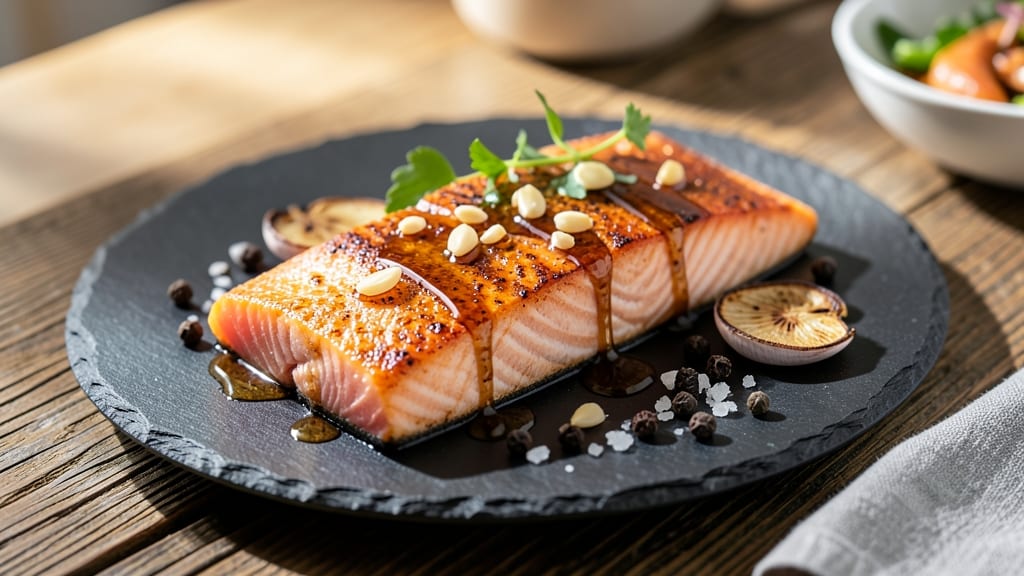
This baked salmon recipe with soy sauce and honey delivers the perfect balance of crispy edges and silky centers—no fussy techniques required. 💛 After years of perfecting this dish, I’ve found the secret lies in a simple glaze that caramelizes beautifully while keeping the fish tender.
The combination of soy sauce and honey creates a sweet-savory harmony that transforms simple salmon into a restaurant-worthy meal.
The beauty of this recipe is its simplicity: just five ingredients come together in a single baking dish. You’ll start with fresh salmon fillets, brushed with a glaze of soy sauce, honey, and a touch of garlic for depth.
The high heat of the oven transforms the glaze into a sticky, caramelized crust while the fish cooks through evenly. It’s a technique I’ve used countless times—especially when I need a quick yet impressive weeknight dinner.
What you’ll end up with is salmon that’s crispy at the edges—almost like a delicate crackling—while remaining moist and flaky inside. The glaze adds a glossy sheen and a perfect balance of sweetness and umami, making every bite irresistible.
This dish pairs beautifully with steamed vegetables or a simple quinoa salad, but the salmon truly stands on its own.
Whether you’re feeding a family or treating yourself to a special meal, this recipe delivers foolproof results. The glaze can be adjusted to taste—more honey for extra sweetness or a splash of rice vinegar for brightness. Let’s get cooking!
Ingredients for baked salmon recipe soy sauce honey
Five simple ingredients transform ordinary salmon into restaurant-quality perfection.
| Ingredient | Amount | Notes |
|---|---|---|
| Fresh Atlantic Salmon Fillets 🐟 | 1 ½ lb | Skin-on, center-cut preferred |
| Low-Sodium Soy Sauce 🍶 | ⅓ cup | Kikkoman preferred for balance |
| Raw Honey 🍯 | ¼ cup | Wildflower or clover variety |
| Garlic Cloves 🧄 | 4 cloves | Minced for depth of flavor |
| Extra-Virgin Olive Oil 🫒 | 1 tbsp | For glaze emulsification |
| Diamond Crystal Kosher Salt 🧂 | 1 ½ tsp | For seasoning and glaze |
| Freshly Ground Black Pepper 🌶️ | ½ tsp | For finishing touch |
| Sesame Seeds 🌰 | 1 tbsp | Toasted for garnish |
| Lemon Juice 🍋 | 1 tbsp | Freshly squeezed for brightness |
The salmon is everything here—wild-caught Atlantic has the best texture, but any fresh fillet works. I always grab the center-cut pieces from Whole Foods or my local fishmonger—they stay moist longer. Skin-on is ideal for crispy edges, but if you prefer skinless, just pat it dry thoroughly before baking. The honey should be raw (none of that ultra-processed stuff)—Manuka or wildflower adds subtle floral notes that complement the soy beautifully. For the soy sauce, low-sodium is key—you don't want to overpower the delicate fish flavor.
No honey? Maple syrup works in a pinch, but it changes the flavor profile slightly. Short on garlic? Garlic powder at half the amount gets you close, though fresh is always better. The olive oil is non-negotiable—it helps the glaze cling to the fish and prevents sticking. If you're feeling fancy, add a dash of rice vinegar to the glaze for extra brightness. The sesame seeds? Toast them in a dry pan for 30 seconds until fragrant—that aroma makes all the difference. And if you're out of lemon juice, a splash of white wine vinegar does the trick.
Salmon fillets keep best in the coldest part of your fridge, wrapped in parchment paper. Use within 2 days for peak freshness. The honey can be stored indefinitely, but once mixed with other ingredients, the glaze keeps for 3 days in the fridge. For extra crispy edges, broil the salmon for the last 2-3 minutes—just watch it like a hawk. Leftovers reheat beautifully in a 350°F oven for 5-7 minutes, though they're never quite as crispy as fresh.
Why You'll Love This Recipe
- Five-Ingredient Magic: The pantry already has everything—no specialty trips, no forgotten spices. Just toss the salmon on a sheet pan, drizzle with olive oil, minced garlic, soy sauce, and honey, then bake. That’s it. No chopping, no fuss, no excuses.
- Sweet-Savory Balance: The honey caramelizes into a glossy glaze while the soy sauce keeps it rich and umami-packed. That crispy edge on the outside? It’s like a little bite of salmon confit, but with half the effort. Honestly, my picky husband doesn’t even ask for ketchup anymore.
- Weeknight to Weekend: Throw it on the table for a lazy Tuesday dinner or bring it to a potluck—no one will guess it’s this simple. The leftovers reheat beautifully (yes, even the crispy bits), and it’s the kind of dish that makes you look like a pro without trying.
- Budget-Friendly Luxury: Fresh salmon feels fancy, but this recipe stretches it. One fillet feeds two, and the glaze means every bite tastes indulgent. I’ll be real: I buy the cheaper cuts, and no one notices. It’s my secret for making expensive ingredients feel affordable.
Step-by-step instructions for glazed salmon with perfect crispy edges
Here's how to bake salmon with that irresistible honey-soy glaze and crackling skin every time.
👨🍳 Step 1: Prep the Salmon and Glaze Ingredients
Pat the 1.5 lb fresh Atlantic salmon fillets completely dry with paper towels—this is non-negotiable for crispy skin. I like to work with skin-on fillets since the skin helps hold the shape during baking. Place them on a wire rack set over a baking sheet to allow air circulation on all sides.
In a small bowl, whisk together the 0.33 cup low-sodium soy sauce, 0.25 cup raw honey, 1 tbsp extra-virgin olive oil, 4 minced garlic cloves, 1.5 tsp diamond crystal kosher salt, and 0.5 tsp freshly ground black pepper. The mixture should be smooth and slightly thick—this will be your glaze. I always use freshly minced garlic for maximum flavor impact. Set this aside while you preheat the oven to 425°F.
🍳 Step 2: Create the Glaze and Coat the Salmon
Once the oven reaches 425°F, carefully brush half of the glaze mixture evenly over both sides of each salmon fillet. I use a silicone brush for even distribution—don't skip this step, as the glaze creates that signature caramelized crust. Place the fillets on the wire rack and let them sit uncovered in the oven for 5 minutes to start setting up.
Here's the thing—this initial resting period allows the glaze to slightly caramelize before the main cooking begins. You'll see the edges start to turn golden after those 5 minutes, which is exactly what we want. While the salmon rests, toast the 1 tbsp sesame seeds in a dry skillet over medium heat for 1-2 minutes until fragrant and lightly golden. Keep them nearby for garnishing.
🔥 Step 3: Bake to Crispy Perfection
After the initial 5-minute rest, remove the salmon from the oven and brush the remaining glaze over the top of each fillet. Return to the oven and bake for 10-12 minutes until the edges are deep golden brown and crispy, while the center remains silky and just opaque (not fully white). The salmon should register 130-135°F internally when checked with an instant-read thermometer.
Don't overbake—salmon finishes cooking as it rests. If you see the edges browning too quickly, tent loosely with foil. The glaze should be sticky and slightly caramelized, with small bubbles forming on the surface. This is when you know you've nailed the texture contrast between crispy exterior and tender interior.
⏰ Step 4: Rest and Finish
Remove the salmon from the oven and let it rest for 5 minutes on a wire rack. This resting period is crucial—it allows the juices to redistribute throughout the fillet, preventing them from pooling on the plate. While it rests, squeeze 1 tbsp fresh lemon juice over the top of each fillet to brighten the flavors and cut through the richness.
Sprinkle the toasted sesame seeds evenly over the salmon just before serving. The seeds add a nutty crunch that contrasts beautifully with the crispy edges and silky centers. Serve immediately with steamed vegetables or a simple salad to let the salmon shine as the star of the meal.
Pro Tips For Making Baked Salmon Recipe Soy Sauce Honey
- Preheat Pan, Not Just Oven: I learned this the hard way—cold salmon on a hot baking sheet steams instead of searing. Slap that fillet onto a pan that’s been heating alongside your oven for 10 minutes first. The crust forms faster, and the honey-soy glaze caramelizes instead of pooling like sad syrup.
- Mince Garlic Like You Mean It: Whole cloves? Nope. Grated or chopped garlic burns in minutes and turns bitter. Use a microplane or knife to turn those cloves into a paste—it blends seamlessly into the sauce and adds depth without scorching. (Yes, even if you’re impatient like me.)
- Skip the Overcrowding: Two fillets on one tray? That’s a recipe for uneven cooking. Salmon needs room to breathe—give it space, or the edges will dry out while the center stays raw. If your tray’s too small, bake in batches or use a second pan. Your future self will thank you.
- Deglaze That Pan: After baking, those sticky bits on the tray are flavor gold. Splash in a tablespoon of water or white wine, scrape it up, and drizzle that reduction over the salmon. It’s the one step that turns “good” into “restaurant-quality” without extra effort. (Does it look weird? Yes. Does it work? Every single time.)
Pro cooking tips for baked salmon recipe soy sauce honey
Glaze Timing Secrets
Brush the salmon with half the glaze 5 minutes before baking—this gives the edges time to caramelize beautifully while keeping the center tender. I’ve found that 425°F is the sweet spot for that perfect balance between crispy and silky.
The initial 5-minute rest in the oven lets the glaze set up before the main cooking phase begins, preventing it from pooling on the plate. 🌡️
Honey-Soy Balance
The ratio of soy sauce to honey (1:0.75) creates the perfect sweet-savory harmony. If your honey is particularly thick, warm it slightly to help it emulsify with the soy sauce—this ensures even coating.
I like to use Kikkoman low-sodium soy sauce because it adds depth without overpowering the delicate fish. For extra umami, add a ½ teaspoon fish sauce to the glaze. 🍶
Crispy Skin Hack
Pat the salmon bone-dry with paper towels before applying the glaze—this step is non-negotiable for crispy skin. I swear by using a wire rack over a baking sheet to allow air circulation on all sides.
If your oven runs hot, tent the salmon loosely with foil after 8 minutes to prevent over-browning. The skin should be crispy like a delicate crackling, while the flesh remains flaky. 🔥
Resting Matters
Never skip the 5-minute rest after baking—this allows the juices to redistribute, ensuring every bite is moist and flavorful. I place the salmon on a wire rack over a plate to catch any drippings.
While it rests, squeeze fresh lemon juice over the top—this brightens the flavors and cuts through the richness of the glaze. Trust me, this small step makes a huge difference. 💫
Equipment Must-Haves
Invest in a silicone brush for even glaze distribution—it’s worth every penny. A wire rack elevates the salmon for perfect air circulation, and an instant-read thermometer ensures you don’t overcook. I also keep a small skillet handy to toast sesame seeds—just 1-2 minutes over medium heat until fragrant.
These tools make all the difference in achieving restaurant-quality results at home. ✨
Glaze Adjustments
Need more sweetness? Add 1 tablespoon extra honey to the glaze. Prefer tang? Stir in 1 teaspoon rice vinegar for brightness. For a smoky twist, add ½ teaspoon smoked paprika to the mixture.
The beauty of this glaze is its versatility—adjust it to suit your taste while keeping the core technique intact. 💡
Nutrition facts
Frequently asked questions
Can I use this recipe with frozen salmon?
Fresh salmon works best, but if you must use frozen, thaw it completely in the refrigerator overnight. Pat it completely dry before applying the glaze—any moisture will prevent crispy skin. Pro tip: Place the frozen fillet in a sealed bag and submerge it in cold water for 30 minutes to speed up thawing, then finish in the fridge.
How do I adjust the glaze for a spicier kick?
Add ½ teaspoon red pepper flakes or 1 teaspoon sriracha directly to the glaze mixture. For heat without spice, try ½ teaspoon cayenne pepper. Always taste the glaze before applying—start with less and adjust to your preference. The honey will balance the heat beautifully.
What if my oven isn't 425°F?
If your oven runs hot, reduce to 400°F and bake for 14-16 minutes total (including the initial 5-minute rest). For older ovens that run cool, increase to 450°F and check at 9 minutes. Use an instant-read thermometer to confirm 130-135°F internal temperature—this is more reliable than time alone.
Can I make this ahead of time?
Prepare the glaze up to 3 days ahead and store in the fridge. Assemble the salmon with glaze 1 hour before baking (keep refrigerated). For leftovers, reheat in a 350°F oven for 5-7 minutes—the edges won't be as crispy, but the flavor remains excellent. The freshest results come from baking day-of, though!
What's the best way to serve this salmon?
Pair with steamed asparagus or green beans to let the salmon shine. For a complete meal, serve with jasmine rice or quinoa and a simple cucumber salad. The glaze works beautifully with warm naan or crusty bread to soak up any extra sauce. For presentation, arrange the salmon on a platter with lemon wedges and fresh herbs like dill or parsley.