
Sauces & Condiments
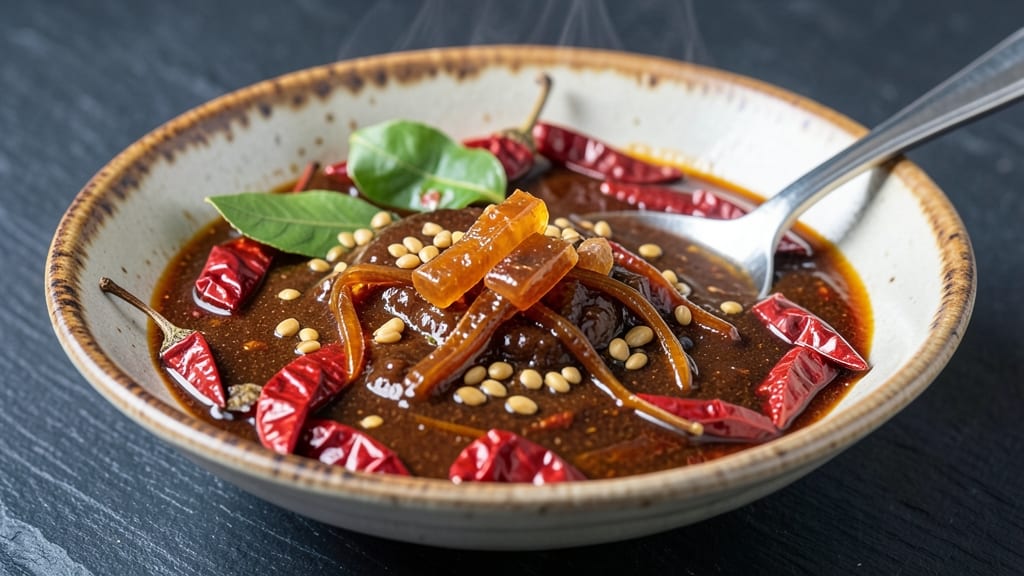
This achari sauce recipe delivers the fiery, tangy punch of South India’s most beloved condiment in just 15 minutes. The secret lies in toasting whole spices until they release their deepest aromas—mustard seeds popping, curry leaves sizzling, and dried chilies turning vibrant red.
I’ve perfected this vegetarian version with tamarind for that signature tang, balancing heat with sweetness from jaggery or brown sugar.
The sauce transforms from a thick paste to a glossy, velvety drizzle when thinned with water, clinging to every bite like a flavor bomb. What makes this recipe special is the layered complexity: smoky from the tempered spices, bright from the tamarind, and slightly sweet from the jaggery.
It’s the kind of sauce that turns simple dal or dosa into a restaurant-worthy meal.
What you’ll end up with is a versatile condiment that elevates everything it touches—drizzled over steaming hot idli, swirled into sambar, or used as a dip for crispy vada. The flavors develop even more after a day in the fridge, deepening into something rich and addictive.
Store it in an airtight jar for up to 2 weeks, where it’ll keep your pantry stocked with South Indian soul.
For those avoiding ghee, this version uses coconut oil, and for extra heat, add more dried chilies or a pinch of cayenne. The key is patience during the tempering—don’t rush the spices, or you’ll miss that smoky depth.
Let’s make this sauce, the heart of South Indian cooking, in your own kitchen.
Ingredients for achari sauce
Nine aromatic ingredients transform into South India’s fiery, tangy sauce masterpiece.
| Ingredient | Amount | Notes |
|---|---|---|
| Mustard Seeds 🌱 | 2 tbsp | Whole seeds, light brown preferred |
| Dried Red Chilies 🌶️ | 10 whole | Kashmiri or bird's eye for heat |
| Curry Leaves 🌿 | ½ cup | Fresh, tightly packed |
| Coconut Oil 🫒 | ½ cup | Unrefined for authentic flavor |
| Tamarind Paste 🍈 | ½ cup | Unadulterated, no sugar added |
| Jaggery or Brown Sugar 🍯 | ¼ cup | Grated finely for smooth texture |
| Asafoetida Powder 🧂 | ½ tsp | Essential for authentic taste |
| Cumin Seeds 🌿 | 1 tbsp | Toasted for deeper aroma |
| Fenugreek Seeds 🌱 | ½ tbsp | Lightly toasted |
| Salt 🧂 | 1 tsp | Adjust to taste |
| Water 💧 | ½ cup | For thinning sauce |
Mustard seeds and dried chilies are the soul of achari—grab the light brown mustard seeds for that classic pop. Kashmiri chilies add color without extreme heat, while bird's eye chilies bring the fire. Curry leaves? Fresh is non-negotiable—the dried kind just doesn’t cut it. I always buy them from Indian grocery stores where they’re sold in bundles. Toasting these spices in coconut oil until they sizzle is where the magic happens—don’t rush this step or you’ll miss that smoky depth. For coconut oil, unrefined is key—it’s got that nutty, earthy flavor that store-bought refined versions lack.
No tamarind paste? Fresh tamarind pulp squeezed through a sieve works perfectly, but it’s a bit of a project. Jaggery or brown sugar? Jaggery wins for authenticity, but brown sugar in a pinch is fine—just make sure it’s dark for that molasses depth. Asafoetida (hing) might be tricky to find outside Indian stores, but look for the small amber-colored crystals. The cumin and fenugreek seeds can be swapped for ground versions at half the amount, but toasting them first makes all the difference. Salt is the final balance—taste as you go, especially if you’re using jaggery which can vary in sweetness.
This sauce gets better with time—2 weeks in an airtight jar in the fridge is ideal, but it’ll last months if you freeze portions. I keep a small jar on hand for quick drizzling and freeze the rest in ice cube trays for single-use portions. The sauce thickens as it sits, so add a splash of water when ready to use. If you’re feeling adventurous, add a pinch of cayenne or extra chilies for heat, or a splash of vinegar for extra tang. Trust me, the first time you drizzle this over hot idli, you’ll be hooked.
Why You'll Love This Recipe
- Pantry Magic: I swear by this sauce because it’s all about what’s already in my spice rack. Mustard seeds pop in coconut oil, dried chilies add heat without fuss, and curry leaves bring that fresh aroma—no fresh herbs needed. Honestly, I’ve made it three times this month, and each time I’m reminded how little effort yields big flavor.
- Tamarind Tang Explosion: That first spoonful of tamarind paste—sour, rich, unexpected—is what makes this sauce sing. It cuts through richness, balances heat, and leaves you wanting more. I’ll be real: my kids initially wrinkled their noses, but now they ask for seconds. (Yes, even on a Tuesday night.)
- Dosa to Dal Flex: This sauce isn’t just for one dish. Slather it on dosas, drizzle it over dal, or toss it with roasted veggies—it’s my secret weapon for turning simple meals into something special. Between us, I’ve even used it as a marinade for grilled chicken. Versatile? Absolutely. Reliable? Even more so.
- Lasts All Week: A little goes a long way, and this sauce keeps in the fridge for days without losing its punch. I make a big batch on Sundays, store it in a jar, and pull it out whenever I need a flavor boost. Budget-friendly? Check. Time-saving? Double check. It’s the kind of recipe that pays off.
Step-by-step instructions for authentic achari sauce
This vibrant South Indian sauce comes together faster than you'd think—just follow these simple steps.
Toast the Whole Spices for Maximum Flavor
Heat the 0.5 cup coconut oil in a heavy-bottomed pan over medium-low heat. Add the 2 tbsp mustard seeds and let them pop and sizzle for about 1 minute—you'll hear them crackle like tiny fireworks. This is where the magic starts.
Next, add the 10 whole dried red chilies and 1 tbsp cumin seeds. Stir constantly for 2-3 minutes until the cumin seeds turn a rich golden brown and the chilies begin to darken slightly. The aroma will fill your kitchen—trust me, this is worth the wait. Remove from heat immediately after topping to prevent burning.
Add Curry Leaves and Toasted Fenugreek
Return the pan to medium heat and add the 0.5 cup curry leaves. They'll wilt and darken quickly—just 30 seconds is all it takes. Immediately stir in the 0.5 tbsp fenugreek seeds (pre-toasted for 1 minute in a dry pan until fragrant). The combination of these spices creates that unmistakable South Indian flavor profile.
Here's the thing—don't rush this step. The fenugreek needs to bloom and release its nutty aroma, while the curry leaves should be crispy at the edges. If they turn black too quickly, you've gone too far. Taste the spices at this stage—they should be intensely aromatic with a subtle bitterness.
Incorporate Tamarind and Jaggery for Tangy Sweetness
Reduce heat to low and add the 0.5 cup tamarind paste and 0.25 cup jaggery or brown sugar. Stir continuously for 3-4 minutes until the jaggery dissolves completely and the mixture begins to thicken slightly. The tamarind will give that signature tangy kick while the jaggery balances it with natural sweetness.
I like to press the jaggery through a fine-mesh strainer to eliminate any lumps—this ensures a silky smooth sauce. If the mixture looks too thick, add 1-2 tablespoons of water to help it blend properly. The sauce should coat the back of a spoon but still be pourable.
Finish with Asafoetida and Water for Authentic Depth
Add the 0.5 tsp asafoetida powder and stir vigorously for 30 seconds—this is the secret ingredient that gives achari its authentic umami depth. Immediately pour in the 0.5 cup water and bring to a gentle simmer. Let it cook for 5-7 minutes until the sauce thickens to your desired consistency.
Taste and adjust seasoning with the 1 tsp salt. The sauce should balance sweet, sour, spicy, and savory flavors. If it's too tangy, add a pinch more jaggery. If it needs more heat, you can add a few more dried chilies. Remember, you can always adjust the spice level at the end—this is what makes achari so versatile.
Cool and Store for Maximum Flavor Development
Remove from heat and let the sauce cool completely. The flavors will continue to meld and deepen as it sits. For best results, store in an airtight container in the refrigerator for at least 4 hours (overnight is even better) before using.
This resting period allows all the spices to fully infuse and the sauce to develop its complex character. When ready to use, reheat gently on low heat, stirring occasionally to prevent burning. Achari sauce keeps well in the fridge for up to 2 weeks—perfect for drizzling over dosas, idlis, or using as a marinade.
Pro Tips For Making Achari Sauce
- CRANK THE HEAT LOW: Mustard seeds burn faster than you think—especially in coconut oil. After spluttering for 10 seconds, drop the flame to medium-low. I learned this the hard way when my first batch turned bitter; now I keep a close eye and adjust immediately.
- SOAK DRY CHILIES FIRST: Toss dried red chilies in warm water for 5 minutes before grinding. This softens them enough to blend smoothly without clogging your grinder. (Yes, even if you’re impatient like me—trust the process.)
- SALT THE TAMARIND PASTE: Tamarind paste is already tangy but often lacks salt. Add a pinch (about ¼ teaspoon) when dissolving it in water—this balances the sourness before it even hits the pan.
- SKIP THE CURRY LEAVES IF THEY’RE DULL: Fresh curry leaves should smell vibrant; if they’re limp or lack aroma, skip them. Frozen leaves work in a pinch (thaw first), but stale ones just add bitterness. Your nose knows.
Perfect pairings for achari sauce
Curry Pairings
Achari sauce transforms simple curries into flavor bombs. Drizzle it over sambar or rasam for instant depth—just 1 tablespoon per bowl enhances the tangy, spicy profile.
I love adding it to dal makhani in the final minute of cooking, where it melts into the creamy lentils like a secret weapon. 🌶️
Dosa & Idli Elevator
This sauce is a game-changer for breakfast staples. Warm 2-3 tablespoons in a small pan with a pinch of ghee, then drizzle over steaming hot dosas or idlis.
The contrast of the sauce’s heat against the soft, fluffy rice crepes? Absolute perfection. For extra indulgence, add a sprinkle of crushed peanuts on top.
Snack & Appetizer Dip
Turn achari into a spicy dip for crispy snacks. Mix 3 tablespoons with 2 tablespoons yogurt and serve with vada, bonda, or even chips. The tangy-spicy balance cuts through the oiliness of fried foods beautifully.
I keep a small jar in my fridge just for this purpose—it’s my go-to for quick, flavorful bites.
Marinade Magic
Use achari as a marinade for grilled or pan-fried proteins. Toss chicken, paneer, or shrimp in 2 tablespoons of sauce for 15-20 minutes before cooking. The spices penetrate the meat, creating a caramelized crust with every bite.
I’ve even used it on tofu for a vegetarian twist that’s packed with flavor.
Rice & Grains Upgrade
Stir 1-2 tablespoons into steamed rice or biryani while still warm. The sauce clings to each grain, turning plain rice into a flavor-packed side dish.
For extra richness, add a dollop of yogurt or a pat of ghee to balance the heat. This is my secret for restaurant-quality meals at home.
Beverage Pairings
Cool down the heat with mango lassi or nimbu pani after a spicy meal. The creamy sweetness of lassi contrasts perfectly with achari’s tangy kick. For a non-dairy option, try coconut water infused with mint and lime. The refreshing combo cleanses your palate between bites of spicy food. ✨
Nutrition facts
Frequently asked questions
Can I make this achari sauce without jaggery?
Yes! If you don’t have jaggery, substitute it with brown sugar or honey for a similar sweetness. For a vegan version, use maple syrup or agave nectar instead. The key is balancing the tamarind’s tang, so adjust sweetness to taste after cooking.
How spicy should my achari sauce be?
The heat level depends on your preference! Start with 10 dried red chilies for mild heat, or add 2-3 extra chilies (or a pinch of cayenne) for extra kick. Taste as you go—you can always adjust by adding more chilies or thinning with water. The sauce’s depth comes from spices, not just heat.
Can I use store-bought tamarind paste?
Just check the label for added sugar or preservatives. For the best flavor, use 100% pure tamarind paste (no sugar added). If your paste is too thick, thin it with a splash of water before adding to the sauce. Fresh tamarind pulp works too—just strain out the fibers.
Why does my sauce look too thick?
Achari sauce naturally thickens as it cools. If it’s too thick while warm, stir in 1-2 tablespoons of water to loosen it. For a smoother texture, blend briefly with an immersion blender (no need for a food processor). The sauce will thicken again once chilled, so adjust consistency before serving.
How do I store leftover sauce?
Transfer cooled sauce to an airtight container and refrigerate for up to 2 weeks. For longer storage, freeze in ice cube trays—thaw and reheat gently before use. The flavors deepen over time, so leftovers often taste even better! Label your jar with the date.