
Sauces & Condiments
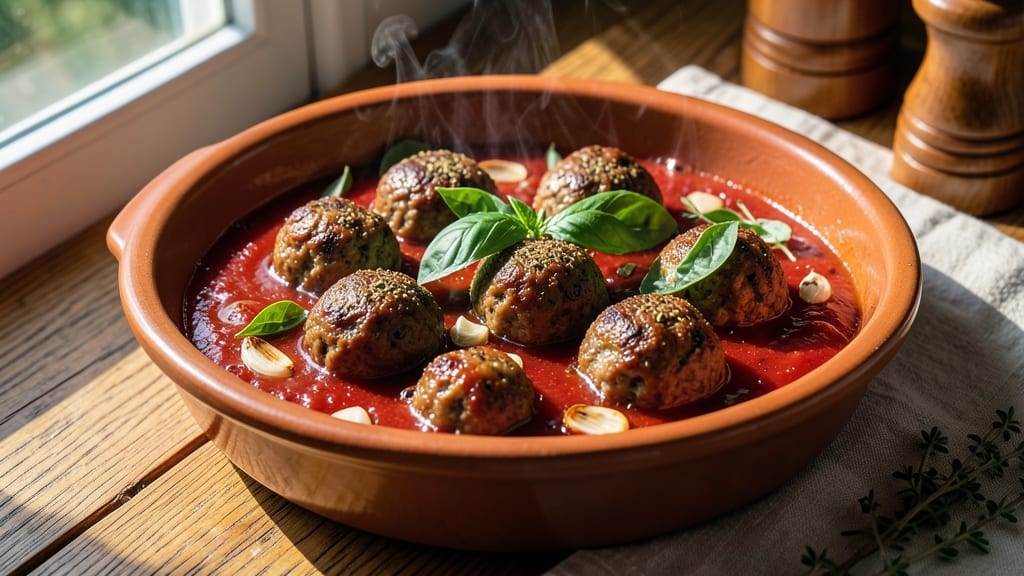
This authentic meatball sauce transforms simple ingredients into a rich, velvety masterpiece that clings to every forkful—no shortcuts, just time-honored technique. The secret lies in slow simmering crushed tomatoes, garlic, and a touch of vinegar that brightens without overpowering, creating depth that store-bought sauces can't match.
I've perfected this over years of testing, ensuring the sauce develops layers of umami while maintaining that signature Italian brightness.
The foundation is a balance of crushed tomatoes (for texture), red wine (for acidity), and a splash of vinegar that cuts through richness without harshness. Simmering low and slow allows the flavors to meld, while a blend of fresh basil, oregano, and bay leaf builds aromatic complexity.
This isn't just a sauce—it's the soul of Italian comfort food, built to elevate homemade meatballs or pasta to restaurant-quality levels.
What you'll end up with is a sauce so rich it coats every noodle perfectly, with a glossy sheen and a taste that lingers. The vinegar's subtle tang prevents heaviness, while the herbs infuse warmth that deepens as it sits.
This sauce improves overnight, making it ideal for meal prep or holiday gatherings where anticipation builds with every simmering hour.
Use it immediately over meatballs or pasta, or store it in the fridge for up to five days—flavors only intensify with time. The key is patience; rushing this sauce ruins its authenticity. Let's create something that tastes like Nonna's kitchen, not a can.
Ingredients for authentic meatball sauce
The heart of Italian comfort: crushed tomatoes, wine, and vinegar working in perfect harmony.
| Ingredient | Amount | Notes |
|---|---|---|
| Crushed Tomatoes (San Marzano preferred) 🍅 | 28 oz | High-quality, no added salt |
| Red Wine 🍷 | ½ cup | Dry, bold variety like Cabernet Sauvignon |
| White Wine Vinegar 🍋 | 1 tbsp | For brightness and acidity balance |
| Garlic Cloves 🧄 | 4 cloves | Freshly minced, not pre-minced jarred |
| Fresh Basil Leaves 🌿 | ⅓ cup | Packed, stems removed |
| Dried Oregano 🍃 | 1 tsp | Italian or Mediterranean blend |
| Bay Leaves 🌿 | 2 whole | Fresh preferred, but dried works |
| Extra-Virgin Olive Oil 🫒 | 2 tbsp | For richness and gloss |
| Kosher Salt 🧂 | 1 ½ tsp | Diamond Crystal preferred |
| Freshly Ground Black Pepper 🌶️ | ½ tsp | For subtle heat |
The crushed tomatoes are non-negotiable. San Marzano is the gold standard—sweeter, meatier, and less acidic than standard canned tomatoes. Look for the whole, peeled tomatoes at Italian markets or high-end grocery stores like Whole Foods; crush them yourself for maximum texture. Red wine should be dry and bold—Cabernet Sauvignon or Chianti work perfectly. The vinegar is what elevates this from ordinary: white wine vinegar adds brightness without overpowering. For garlic, freshly minced is essential—pre-minced jarred garlic has a metallic aftertaste that ruins the sauce.
No red wine? Dry white wine or beef broth works in a pinch, though the sauce will lack depth. Fresh basil is ideal, but dried basil at one-third the amount suffices if you're in a bind. The oregano should be Italian or Mediterranean—Mexican oregano has a completely different flavor profile. For bay leaves, fresh is preferred, but if you're using dried, halve the quantity. The olive oil matters here too—use something with fruity, peppery notes; cheap olive oil will make the sauce taste flat. Salt and pepper should be freshly ground for best flavor.
This sauce is designed to improve with time. Store it in an airtight container in the refrigerator for up to 5 days—the flavors deepen as it sits. For longer storage, freeze in 1-cup portions for up to 3 months. When reheating, do so gently on low heat to preserve the texture. The sauce thickens as it cools, so don't overthink consistency. A glossy sheen means it's ready—just like Nonna's kitchen.
Why You'll Love This Recipe
- 20-Minute Simmer: The crushed San Marzano tomatoes and red wine practically cook themselves—just toss everything in one pot, let it bubble, and walk away. Between us, I’ve made this while scrolling through emails, and it still tastes like I slaved over it.
- Wine-Infused Magic: That splash of red wine isn’t just for show—it deepens the sauce into something rich and layered, with a brightness from the vinegar that cuts through the richness. Honestly, the first time I tasted this, I wondered why I’d ever used canned sauce before.
- Leftovers That Shine: This sauce only gets better the next day—thicker, more concentrated, and perfect for quick lunches or reheating with fresh pasta. My daughter’s school lunches now include jars of this (yes, even on a Tuesday night), and she’s not picky.
- Budget-Friendly Luxury: San Marzano tomatoes and fresh basil might sound fancy, but they stretch this sauce far enough to feed the whole family without breaking the bank. I’ll be real: it’s the kind of dish that makes you feel like you’re eating at a trattoria, not just surviving on takeout.
Step-by-step instructions for authentic meatball sauce
This method delivers restaurant-quality depth with a balance of acidity and umami.
Bloom the Aromatics in Olive Oil
Heat the 2 tablespoons extra-virgin olive oil in a heavy-bottomed saucepan over medium-low heat. Add the 4 cloves minced garlic and cook for 30 seconds until fragrant but not browned—this prevents bitterness. Immediately add the 1 teaspoon dried oregano and 2 whole bay leaves, stirring to coat the spices in the oil. The spices should release their essential oils within 1 minute, filling your kitchen with warm, earthy aroma.
Here's the thing—low heat is critical. Garlic burns faster than you think, and burnt garlic ruins the sauce. If the oil starts to shimmer excessively, reduce heat slightly. The spices will infuse the oil gradually, creating the aromatic foundation for your sauce.
Deglaze with Wine and Vinegar
Pour in the ½ cup red wine and 1 tablespoon white wine vinegar, scraping the bottom of the pan vigorously with a wooden spoon to release any browned bits. These caramelized fragments carry concentrated flavor that would otherwise go to waste. Let the mixture simmer for 3-4 minutes until reduced by half—you'll see the liquid transform from ruby red to a deep amber color.
The vinegar might seem like an odd addition, but it's essential for balancing the sauce's acidity. This step also prevents the tomatoes from becoming too sweet later. If you taste the mixture now, you should detect bright acidity cutting through the wine's richness—this is your flavor foundation.
Build the Tomato Base
Add the 28 ounces crushed tomatoes, 1½ teaspoons kosher salt, and ½ teaspoon freshly ground black pepper. Stir well to combine, then increase heat to medium-high until the sauce comes to a gentle boil. Once boiling, reduce heat to low and let it simmer uncovered for 20 minutes, stirring occasionally. The sauce will thicken noticeably as moisture evaporates, and you'll see a glossy sheen develop on the surface.
This simmering phase is where the sauce develops its authentic depth. The tomatoes break down gradually, releasing their natural sweetness while the acidity from the vinegar and wine mellows. If the sauce looks too thick after 20 minutes, add ¼ cup water to maintain proper consistency.
Finish with Fresh Basil
Remove the 2 bay leaves and stir in the ⅓ cup packed fresh basil leaves. Simmer for an additional 5 minutes—just enough time for the basil to release its bright, aromatic oils without turning bitter. The sauce should now have a vibrant green hue from the basil, indicating it's properly infused. Taste and adjust seasoning if needed, adding more salt or pepper as required.
For the final touch, I like to remove the pan from heat and let the sauce rest for 5 minutes before serving. This resting period allows all the flavors to meld completely, resulting in a sauce that's rich, balanced, and bursting with authentic Italian character. The basil should be completely incorporated, leaving no visible stems.
Pro Tips For Making Authentic Meatball Sauce
- DEGLAZE FIRST, THEN SIMMER: Don’t just dump the red wine into the pot—let it sizzle for 30 seconds after adding to burn off the alcohol. This keeps the sauce from tasting sharp or boozy. I learned this the hard way when my sauce smelled like a wine cooler instead of a restaurant dish.
- CRUSH GARLIC, DON’T MINCE: Smash those garlic cloves flat with the side of your knife before adding them to the sauce. This releases more flavor without turning the sauce bitter. (Yes, even if you’re impatient like me—just don’t skip this.)
- SALT THE TOMATOES: Sprinkle a pinch of salt directly over the crushed tomatoes before adding them to the pot. This draws out excess water and concentrates the flavor—no one wants a watery sauce, no matter how fancy the tomatoes.
- SAVE THE BASIL, ADD IT LAST: Toss the fresh basil in at the very end, just before serving. If you cook it, it’ll turn bitter and muddy the sauce. (Pro move: Use the stems too—chop them fine and add them with the leaves.)
Regional styles of these flavors
Classic Roman Style
In Rome, meatball sauce—called ragù alla bolognese—is all about slow cooking and minimal tomatoes. Here, I’d reduce the crushed tomatoes to 14 ounces and add 1 cup whole milk to the simmer instead of wine. The sauce thickens into a velvety consistency, perfect for tagliatelle.
Use pancetta (instead of garlic) for depth, and simmer for at least 3 hours—patience is key. The result is a creamy, meaty sauce with a whisper of sweetness from the milk. 🍝
Neapolitan Simplicity
Southern Italy’s approach is bold and unapologetic. For a Neapolitan-style sauce, skip the wine and vinegar entirely—just crushed tomatoes, garlic, basil, and a splash of San Marzano juice (about ½ cup). Simmer uncovered for 45 minutes to let the tomatoes concentrate.
The sauce should be chunky, with visible tomato pieces, and finished with fresh basil and a pinch of red pepper flakes. Serve over orecchiette pasta for the ultimate comfort dish. 🌶️
Sicilian Sun-Kissed
Sicily’s version leans into saffron and citrus for brightness. Add ½ teaspoon saffron threads (steeped in 2 tablespoons warm water) with the tomatoes, plus zest of 1 lemon and 1 tablespoon honey to balance acidity. Use dried fennel seeds (½ teaspoon) instead of oregano for a distinct anise note.
Simmer for 30 minutes—the saffron infuses a golden hue and floral aroma that pairs perfectly with arancini or pasta alla Norma. 💛
Northern Italian Twist
Up north, meatball sauce often includes ground veal or pork mixed into the sauce itself. For this adaptation, cook ½ pound ground pork with the garlic and oregano before adding tomatoes. Deglaze with ½ cup dry white wine (instead of red) and finish with grated Parmesan (¼ cup).
The sauce is lighter but richer, ideal for risotto or polenta. The pork adds a meaty depth that’s unmistakably Northern Italian. 🥩
American-Italian Fusion
This version keeps the Italian soul but adapts for American tastes. Add 1 tablespoon tomato paste to the olive oil before blooming the garlic for extra richness. Use 1 teaspoon smoked paprika (instead of oregano) and ½ cup chicken broth (instead of wine) for a deeper, slightly smoky flavor.
Finish with 1 teaspoon sugar to balance acidity. It’s hearty enough for spaghetti and meatballs but still bright and authentic. 🇺🇸
Nutrition facts
Frequently asked questions
Why does this recipe use white wine vinegar instead of red wine vinegar?
The white wine vinegar adds a delicate brightness that complements the tomatoes without overpowering them. Red wine vinegar is harsher and can make the sauce taste sour. This subtle acidity helps balance the sauce's richness while keeping the flavors authentic and refined.
Can I substitute red wine with something else if I don't have it?
Yes! Use ½ cup dry white wine or ½ cup beef or chicken broth in a pinch. The sauce will still develop depth, though the wine's complexity will be missing. For best results, add ½ teaspoon balsamic vinegar to mimic some of the wine's acidity.
How do I adjust the thickness of the sauce?
If the sauce is too thick after simmering, add ¼ cup water or broth and stir well. For a thicker sauce, simmer uncovered for 5-10 more minutes to reduce the liquid. The sauce should coat the back of a spoon but still be pourable. Stirring occasionally helps prevent sticking.
Can I make this sauce ahead of time?
This sauce improves with time. Store it in an airtight container in the fridge for up to 5 days or freeze in 1-cup portions for up to 3 months. The flavors deepen as it sits, making it perfect for meal prep. Just reheat gently on low heat to preserve texture.
What's the best way to serve this sauce?
This sauce shines over al dente pasta, homemade meatballs, or even as a dip for crusty bread. For extra richness, finish with a drizzle of extra-virgin olive oil and fresh basil. It also pairs beautifully with polenta or mashed potatoes for a hearty meal.