
Sauces & Condiments
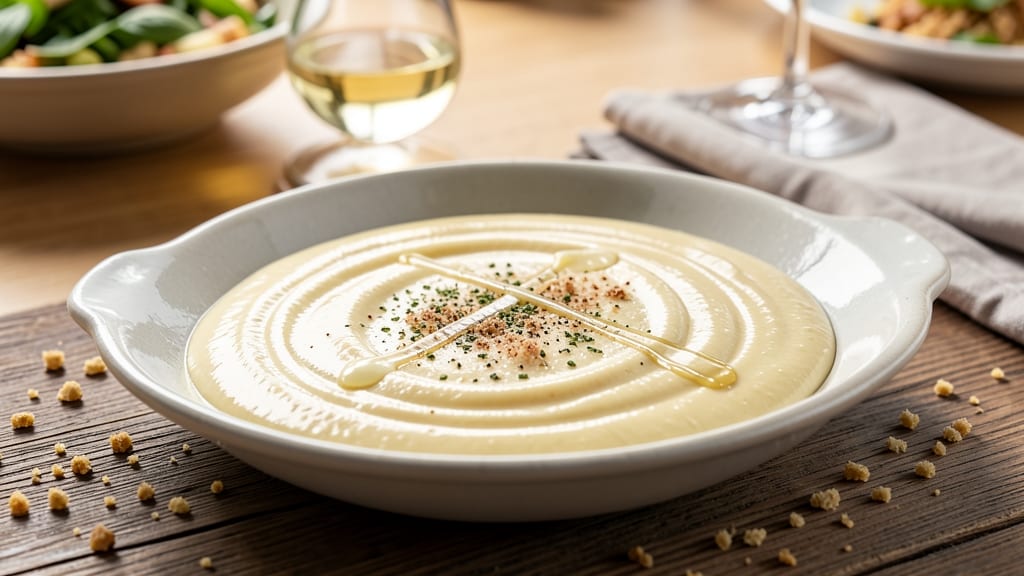
This authentic béchamel sauce recipe transforms simple ingredients into the velvety, rich foundation of classic French cuisine. The secret lies in a perfectly cooked roux—equal parts butter and flour—simmered until golden before gradually whisking in warm milk.
Every step matters: from the slow reduction to the final touch of nutmeg, which elevates this sauce from ordinary to extraordinary.
The result is a smooth, creamy sauce with a delicate balance of flavor, ideal for mac and cheese, lasagna, or even as a base for Mornay. Unlike store-bought versions, this recipe delivers a restaurant-quality texture that’s impossible to replicate with shortcuts.
The key? Patience—letting the roux cook thoroughly ensures no flour taste lingers, while constant whisking prevents lumps.
What sets this béchamel apart is its versatility. Use it as-is for creamy pasta dishes, or transform it into Mornay by stirring in cheese. The sauce thickens beautifully when chilled, making it perfect for meal prep.
Whether you're a home cook or a seasoned chef, this recipe will become your go-to for velvety perfection.
For extra depth, consider adding a splash of white wine or a pinch of cayenne, but the classic version—just butter, flour, milk, and nutmeg—is already foolproof. Let’s get started on creating this timeless sauce that’s the heart of countless dishes.
Ingredients for authentic bechamel sauce
Four essential ingredients transform into the velvety heart of French cuisine.
| Ingredient | Amount | Notes |
|---|---|---|
| Unsalted Butter 🧈 | ½ cup | Cold cut into small cubes |
| All-Purpose Flour 🌾 | ½ cup | Sifted for smooth texture |
| Whole Milk 🥛 | 2 cups | Room temperature preferred |
| Ground Nutmeg 🌿 | ¼ tsp | Freshly grated preferred |
| Salt 🧂 | ¼ tsp | Diamond Crystal preferred |
| White Wine (optional) 🍷 | ¼ cup | Dry variety for depth |
| Cayenne Pepper (optional) 🌶️ | ⅛ tsp | Pinch for subtle heat |
The butter and flour form the roux—this is where magic happens. Use European-style butter (like Plugrá or President) for richer flavor, but any unsalted butter works. The flour should be sifted to avoid lumps, and keep your heat medium-low to prevent burning. Whole milk is non-negotiable here—it creates the signature creaminess. For the nutmeg, freshly grated is ideal, but pre-ground works in a pinch. If you're feeling fancy, Trader Joe's sells pre-grated nutmeg in a jar that lasts months.
No white wine? Chicken or vegetable broth works beautifully for depth. Skip the nutmeg? A pinch of mace adds warmth without overpowering. For extra richness, half-and-half instead of milk changes the texture dramatically. The cayenne is optional but worth it—just start with a pinch and adjust. If your roux gets too dark, you've burned it. Start over; patience is key. The flour-to-butter ratio is critical—equal parts ensures proper thickening without grittiness.
This sauce thickens as it cools, so stir in extra milk if needed while warm. Store in an airtight container in the fridge for up to 5 days, or freeze for 3 months. For best results, reheat gently on low heat, whisking constantly. The sauce is even better the next day as flavors meld. If it separates, simply whisk in a splash of warm milk to restore silkiness.
Why You'll Love This Recipe
- Three-Ingredient Magic: The moment you melt butter into flour—that roux is where the real magic happens. No chopping, no fuss, just whisking three things together until it’s velvety smooth.
- Nutmeg’s Secret Boost: A pinch of freshly grated nutmeg transforms this from basic to ridiculously good—warm, earthy, and just a little mysterious. (Yes, even the kids will ask for seconds.)
- Weeknight Workhorse: Slather it on pasta, stuff it in lasagna, or drizzle it over grilled chicken—this sauce is my go-to when I’m too tired to think. It makes everything feel fancy without the effort.
- Budget-Friendly Luxury: Butter and milk are pantry staples, and a little goes a long way. Make a double batch, freeze half, and you’ve got restaurant-quality sauce ready for whenever cravings hit.
Step-by-step instructions for authentic bechamel sauce
A perfect bechamel starts with patience and proper technique. Here's how to achieve that velvety, lump-free foundation every time.
Prepare the Roux Foundation
In a medium saucepan, melt the 0.5 cup unsalted butter over medium-low heat. I use small cubes of cold butter so it melts evenly without browning. Once completely melted, add the 0.5 cup all-purpose flour all at once and whisk vigorously for 1-2 minutes until the mixture turns a pale golden color.
This is your roux—the backbone of bechamel—and it needs constant attention. If it darkens to tan or brown, you've gone too far. The roux should smell nutty but not toasted. Keep the heat gentle; too much heat develops a raw flour taste. Whisk continuously to prevent lumps from forming, as they'll be nearly impossible to remove later.
Gradually Incorporate the Milk
Slowly pour in 1 cup of the whole milk while whisking constantly. The mixture will thicken immediately, but keep whisking until it returns to a smooth consistency. Once fully incorporated, gradually add the remaining 1 cup whole milk, again whisking continuously to prevent lumps.
Here's where most home cooks rush: don't let the sauce boil. Maintain a gentle simmer at medium-low heat, stirring frequently with a wooden spoon. If you see any lumps forming, immediately press them through a fine-mesh sieve with the back of a spoon. The sauce should thicken to a creamy, pudding-like consistency—similar to heavy cream—after about 5-7 minutes of cooking.
Season and Finish the Sauce
Once the sauce reaches a smooth, velvety texture, remove it from heat. Stir in the 0.25 tsp salt, 0.25 tsp ground nutmeg, and 0.125 tsp cayenne pepper (optional). If using the 0.25 cup white wine (optional), whisk it in now and simmer for an additional 2-3 minutes to allow the alcohol to cook off completely.
The nutmeg adds warmth, salt balances flavors, and cayenne introduces subtle heat—all essential for an authentic bechamel. Taste and adjust seasoning as needed. For a truly refined sauce, strain it through a fine-mesh sieve to ensure absolute smoothness. This step is particularly important if you're using homemade flour or if you noticed any tiny lumps during cooking.
Maintain Perfect Texture
If the sauce thickens too much while you work, thin it with a splash of warm milk. Conversely, if it's too thin, simmer gently for another 1-2 minutes to reduce. The ideal bechamel should coat the back of a spoon but still flow smoothly when poured.
For best results, use the sauce immediately in dishes like mac and cheese or chicken pot pie. If storing, let it cool completely, then refrigerate in an airtight container for up to 3 days. To reheat, warm gently over low heat while stirring constantly to prevent skin formation. Never microwave bechamel—it creates a skin and breaks the silky texture.
Pro Tips For Making Authentic Bechamel Sauce
- Whisk Like You Mean It: The roux is where bechamel lives or dies—don’t stir it with a spoon like you’re mixing pancake batter. Use a flat whisk (or wooden spoon if you’re old-school) and scrape the bottom constantly. I learned this the hard way after one batch turned into a sad, grainy glue.
- Salt the Butter First: Toss in a pinch of salt with the butter before you even think about the flour. Unsalted butter is bland, and this step guarantees your sauce won’t taste like a science experiment. (Yes, even if you’re using salted milk later—trust me.)
- Temper the Milk Slowly: Pouring cold milk into hot roux is how you end up with lumps. Warm the milk first—just until it’s steaming, not boiling—and add it drop by drop at first, whisking like your life depends on it. Once it’s mostly incorporated, you can thin it out faster.
- Nutmeg Last, Less Than You Think: Freshly grated nutmeg is non-negotiable, but don’t go overboard—start with a tiny pinch (⅛ teaspoon) and taste as you go. My grandmother’s trick: sprinkle it over the finished sauce, then whisk it in so it doesn’t overpower. (And for the love of all things creamy, don’t use pre-ground spice from the jar.)
Essential equipment for authentic bechamel sauce
Roux Pan Essentials
Start with a heavy-bottomed saucepan—I swear by my All-Clad Stainless Steel—to prevent scorching during the roux stage. A medium size (2-3 quart) gives enough room for whisking without overflow.
Avoid nonstick pans; they can’t handle the heat needed for proper roux development. For budget-friendly options, Calphalon or Farberware work beautifully too. 🔥
Whisking Tools
A balloon whisk is non-negotiable for this recipe—it incorporates air while blending ingredients smoothly. My go-to is the OXO Good Grips whisk, which has sturdy wires that stand up to constant use.
If you’re tight on space, a French whisk works just as well. Pro tip: Keep a second whisk handy for stirring while you whisk—this prevents lumps from forming when adding milk.
Temperature Control
Invest in a candy or instant-read thermometer to monitor your roux’s temperature—ideal range is 160-170°F. I use the Thermoworks Thermapen ONE for precision. A kitchen torch can also help achieve that perfect pale golden color if your stove struggles with low heat.
For even cooking, place your saucepan on the back burner of your stove and use the middle burner for milk incorporation to maintain consistent heat.
Straining Gear
For that ultra-smooth finish, a fine-mesh sieve or China cap is essential. My favorite is the Heston Blumenthal sieve—it’s sturdy and won’t bend under pressure. If you’re straining hot sauce, use a heat-resistant silicone spatula to press through any stubborn lumps.
For a budget option, a $10 stainless steel mesh strainer from Amazon works surprisingly well.
Storage Containers
Once your bechamel is made, transfer it to glass airtight containers for storage—I recommend Pyrex or Le Parfait containers. They’re microwave-safe (though I don’t recommend microwaving bechamel) and keep the sauce fresh for up to 5 days in the fridge.
For freezing, use silicone molds or quart-sized freezer bags with ¼ inch headspace to prevent expansion cracks. Label everything—trust me, you’ll thank yourself later. ❄️
Nutrition facts
Frequently asked questions about authentic béchamel sauce
Why does my béchamel taste like raw flour?
This happens when the roux doesn't cook long enough to develop flavor. The butter and flour need to cook for 1-2 minutes at medium-low heat until it turns pale golden and smells nutty. If you rush this step, the flour taste will remain. Keep whisking constantly to prevent burning while developing the roux.
Can I substitute whole milk with something else?
Yes, but expect different results. For a lighter sauce, use 2% milk, but it won't be as creamy. For extra richness, try half-and-half or heavy cream (reduce milk to 1.5 cups for proper thickening). For a dairy-free version, use unsweetened almond milk with 1 tbsp cornstarch mixed in, but the texture will be thinner.
How do I fix lumps in my béchamel?
Don't panic! Immediately press any lumps through a fine-mesh sieve using the back of a spoon. For stubborn lumps, strain the entire sauce. To prevent lumps next time, whisk vigorously when adding milk and keep heat at medium-low. Never let the sauce boil—this causes lumps to form and harden.
What's the difference between béchamel and Mornay sauce?
Mornay is simply béchamel with cheese added! Stir in 1 cup grated Gruyère or Emmental (plus a splash of cream if needed) to make Mornay. The cheese melts into the sauce, creating a richer, more decadent version perfect for croque monsieur. Keep heat low to prevent cheese from seizing.
Can I make béchamel ahead of time?
In fact, it tastes even better the next day. Let it cool completely, then store in an airtight container in the fridge for 3-5 days or freeze for 3 months. To reheat, warm gently over low heat while whisking constantly. Never microwave—it creates a skin and ruins the silky texture.