
Sauces & Condiments
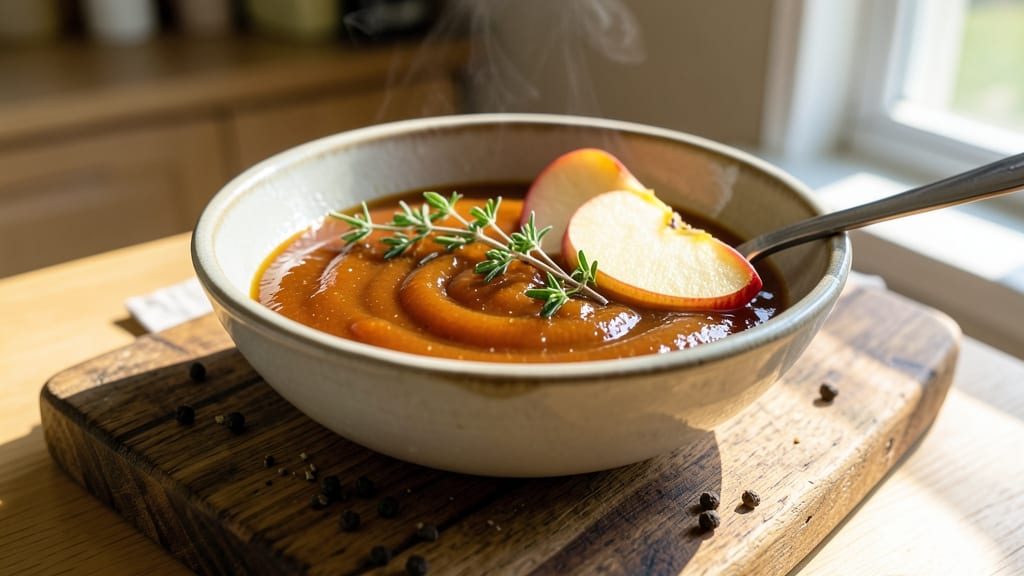
This apple juice BBQ sauce recipe transforms grilling into a sweet-tart masterpiece that balances traditional smoky depth with bright fruit notes. 🔥 As someone who grew up with the rich flavors of slow-cooked ribs, I've spent years refining sauces that complement grilled meats without overpowering them—this one delivers that perfect harmony.
The apple juice brings natural sweetness while maintaining that essential tang, creating a glaze that caramelizes beautifully on the grill or stovetop.
The secret lies in balancing the sauce's components: apple juice provides the sweet base, vinegar adds that crucial tartness, and spices like smoked paprika and mustard create layers of complexity.
What makes this sauce truly versatile is its ability to work as a marinade, glaze, or dipping sauce—whether you're grilling ribs, chicken, or even vegetables. The long simmer reduces it to a perfect consistency that clings to every bite while enhancing the natural flavors of your protein.
What you'll end up with is a glossy, aromatic sauce that's sweet enough to please fruit lovers but tart enough to satisfy traditional BBQ fans. The apple juice prevents the sauce from becoming too heavy, keeping each bite bright and refreshing.
This isn't just another BBQ sauce—it's a game-changer for anyone looking to elevate their grilling with a touch of unexpected fruitiness.
Best of all, this sauce keeps well in the refrigerator for up to two weeks, making it perfect for meal prep. The flavors actually deepen over time, rewarding your patience with an even more complex sauce.
Whether you're competing at a local BBQ contest or just grilling for family, this recipe delivers professional-quality results with simple ingredients and straightforward technique.
Ingredients for apple juice bbq sauce
Sweet-tart balance starts with these 10 simple ingredients—apple juice and vinegar lead the way.
| Ingredient | Amount | Notes |
|---|---|---|
| Apple Juice 🍎 | 1 ½ cups | Unfiltered for best flavor |
| Apple Cider Vinegar 🍏 | ½ cup | Raw, unfiltered preferred |
| Tomato Paste 🍅 | ½ cup | Squeeze tube for convenience |
| Smoked Paprika 🌶️ | 1 tbsp | High-quality for smokiness |
| Dijon Mustard 🥬 | 1 tbsp | Mild or hot, your choice |
| Brown Sugar 🍚 | ¼ cup | Light or dark works |
| Garlic Cloves 🧄 | 3 cloves | Minced for deep flavor |
| Onion Powder 🧅 | 1 tsp | Freshly ground preferred |
| Ground Black Pepper 🌶️ | ½ tsp | Freshly cracked for heat |
| Salt 🧂 | 1 tsp | Kosher or sea salt |
The apple juice is non-negotiable here—unfiltered, organic makes all the difference (think Tree Top or Odwalla for quality). If you can't find raw apple cider vinegar, Bragg is the next best thing. The tomato paste? Squeeze tubes at Trader Joe's are a lifesaver—they keep forever and you won't waste half a can. Smoked paprika should smell like campfires, not dust. Penzeys or the bulk bins at Whole Foods are my go-to spots. For garlic, roast it first—toss whole cloves in a 400°F oven for 10 minutes, then mince. Sweetness comes from brown sugar, but coconut sugar works too if you're avoiding refined sugar.
No apple juice? White grape juice or pear nectar in a pinch, but the flavor won't be identical. Vinegar substitute? Lemon juice at half the amount, but you'll lose that tangy depth. Running low on tomato paste? Crushed tomatoes plus a pinch of sugar mimics the texture. For the mustard, Dijon is essential—yellow mustard won't give you that same complexity. The spices can be adjusted: half the paprika and double the onion powder if you love sweetness. Want extra smokiness? Add 1/4 tsp liquid smoke at the end. And if you're gluten-sensitive, check your mustard—some brands use vinegar processed with wheat.
This sauce gets better with time—2 weeks in the fridge is ideal, with flavors deepening like a fine wine. For longer storage, freeze in ice cube trays, then transfer to a bag. Label with dates—trust me, you'll forget. Reheat gently on the stove or microwave in 30-second bursts. The sauce thickens as it cools, so thin with a splash of apple juice if needed. Pro tip: Brush it on 10 minutes before grilling for maximum caramelization. Leftovers? Toss in a ziplock bag and freeze for up to 6 months—perfect for last-minute BBQ emergencies.
Why You'll Love This Recipe
- No Pantry Panic: I’ll never stress over missing ingredients again—this sauce only needs five staples, most of which you already have. That apple cider vinegar? Probably lurking in your fridge. The Dijon? I bet you’ve got it tucked behind the soy sauce. No last-minute grocery runs, just a quick stir.
- Sweet-Smoky Magic: The apple juice keeps it bright and tangy, while the smoked paprika adds this deep, campfire-like warmth—like autumn in a bottle. Honestly, the first time I tasted it on ribs, I nearly dropped my fork. That balance? Chef’s kiss.
- Weeknight Wonder: Slather it on grilled chicken for a Tuesday dinner, toss it with roasted potatoes for a Friday night, or even drizzle it over deviled eggs for a brunch surprise. (Yes, I’ve done it.) It’s the kind of sauce that turns ordinary meals into “we actually cooked tonight” moments.
- Fridge Hero: Make a double batch—it keeps for weeks in the fridge and freezes like a dream. Between us, I’ve pulled this from the freezer straight onto cold burgers, and no one’s ever complained. Budget-friendly? Absolutely. Lazy-day lifesaver? Even more so.
Step-by-step instructions for apple juice BBQ sauce
This tangy-sweet glaze transforms grilled meats into showstoppers—let's make it!
🍳 Step 1: Simmer the Apple Juice Base
Combine the 1.5 cups apple juice and 0.5 cup apple cider vinegar in a medium saucepan over medium-high heat. Bring to a gentle boil, then immediately reduce to medium-low heat and let it simmer uncovered for 5-7 minutes until slightly reduced by about ¼ cup. You'll notice the aroma intensify—that's when the apple flavors start concentrating.
Here's the thing—I like to skim off any foam that rises to the surface with a spoon. This keeps our sauce clean and prevents any bitterness from developing. The mixture should smell vibrant and slightly sweet with a hint of vinegar tang. If you see any scum forming, remove it immediately to maintain that bright, fresh flavor profile.
🍳 Step 2: Build the Flavor Foundation
Add the 0.5 cup tomato paste, 0.25 cup brown sugar, 1 tbsp smoked paprika, 1 tbsp Dijon mustard, 3 minced garlic cloves, 1 tsp onion powder, 0.5 tsp ground black pepper, and 1 tsp salt all at once. Stir vigorously with a wooden spoon to dissolve the brown sugar completely—this prevents any graininess in your final sauce.
Let the mixture bubble gently for 3-4 minutes until it thickens slightly and the raw garlic aroma disappears. You're looking for the sauce to coat the back of a spoon when you run your finger through it. If it's still too thin at this point, don't worry—we'll reduce it further in the next step. The smoked paprika will start developing its characteristic aroma, and that's when you'll know you're on the right track.
⏰ Step 3: Reduce for Perfect Consistency
Increase the heat to medium-high and let the sauce bubble vigorously for 8-10 minutes, stirring occasionally. You want it to reduce until it reaches a glossy, syrupy consistency that coats the back of a spoon but still flows freely. This is the sweet spot—thick enough to cling to meats but thin enough to brush on easily.
Here's a pro tip: If the sauce starts sticking to the bottom of the pan, add 1-2 tablespoons of water to deglaze it. The goal is to develop a rich, concentrated flavor without burning. You'll know it's ready when it coats the pan in a thin, even layer that doesn't immediately evaporate. The color should be a deep amber with a glossy sheen—this indicates proper reduction and flavor development.
🥘 Step 4: Cool and Adjust Seasoning
Remove the sauce from heat and let it cool for 10 minutes at room temperature. This cooling period is crucial—it allows the flavors to meld and the sauce to thicken slightly as it cools. Taste it now and adjust the seasoning if needed. You might want to add a pinch more salt or a splash of apple cider vinegar to balance the sweetness.
I always like to give the sauce one final stir before using it. This helps redistribute any settled ingredients and ensures a consistent texture. The sauce should be smooth with no visible lumps, and the flavors should be perfectly balanced between sweet, tangy, and smoky. If you're using it immediately, you can skip the refrigeration step. But for best results, store it in an airtight container in the refrigerator for up to 1 week—the flavors actually improve with time!
Pro Tips For Making Apple Juice Bbq Sauce
- Simmer Slow and Steady: This isn’t a race—reduce your sauce on medium-low heat for at least 20 minutes. I used to crank it up high and end up with a skin forming on top, no matter how much I stirred. Let it bubble gently so the apple juice and vinegar meld instead of evaporating into thin air.
- Whisk in the Mustard Last: Dijon mustard burns faster than you’d think. Stir it in just before removing the pan from heat—that way, it blends smoothly without curdling or losing its tang. (Yes, even if you’re impatient like me.)
- Strain the Tomato Paste: Skip the chunky bits by pressing the tomato paste through a fine-mesh sieve before adding it to the sauce. It’s a little extra work, but it gives you that silky texture instead of a gritty mouthfeel—especially if you’re using thick, pulpy paste.
- Balance the Vinegar Early: Taste the raw vinegar-apple juice mix before adding sugar or spices. If it’s too sharp, add a splash of juice back in instead of drowning it in sweetener later. You’ll save yourself from overcorrecting and ending up with a dessert sauce instead of BBQ.
Serving suggestions for this recipe
Grilled Meats
This sauce is a game-changer for grilled chicken, ribs, and pork chops. Brush it on 10-15 minutes before grilling to create a caramelized crust that locks in juices.
For ribs, apply it after the first hour of smoking when they hit 165°F—the apple juice keeps them tender while the smoky spices penetrate deeply. 🔥
For chicken thighs, marinate them in ½ cup sauce + 1 tbsp olive oil for 2-4 hours before grilling. The acidity in the vinegar tenderizes the meat while the apple juice adds natural sweetness.
I like to finish with a quick sear on a hot grill to get that perfect char.
Vegetable Sides
Don't limit this sauce to meats—it's fantastic on grilled vegetables too. Toss asparagus, zucchini, or bell peppers with 1 tbsp sauce and grill until tender-crisp. The natural sweetness of the apple juice caramelizes beautifully on the grill, creating a glossy finish. 🌶️
For a showstopper side, brush grilled corn on the cob with sauce and sprinkle with chopped cilantro. The smoky-sweet glaze pairs perfectly with the natural sweetness of corn. I also love drizzling it over grilled portobello mushrooms for a meaty vegetarian option.
Dipping Sauce
Serve this sauce as a dipping sauce for fried chicken, mozzarella sticks, or even crispy tofu. The balance of sweet and tangy makes it irresistible. I like to keep a small bowl on the table for guests to dip into—it disappears fast! 🍗
For extra flair, add 1 tsp honey to each serving just before dipping. The additional sweetness enhances the apple notes while keeping the sauce from becoming too heavy. It's especially popular at my backyard cookouts when we're serving up wings or pulled pork sandwiches.
Breakfast Twist
This sauce isn't just for dinner—it's perfect for breakfast too! Drizzle it over pancakes or waffles for a sweet-savory twist. The smoky depth pairs surprisingly well with fluffy buttermilk batter. I often make a batch on Sunday mornings and keep it in the fridge for quick breakfasts all week. 🥞
For a heartier breakfast, spread it on grilled cheese sandwiches with sharp cheddar. The tangy-sweet sauce cuts through the richness of the cheese while adding a smoky depth that elevates the whole sandwich to restaurant quality.
Nutrition facts
Frequently asked questions about apple juice BBQ sauce
Can I substitute apple juice with another fruit juice?
Yes, but expect different flavor profiles. White grape juice or pear nectar work well as substitutes—they maintain the sweetness while adding subtle fruit notes. Avoid citrus juices like orange or pineapple, as they can overpower the smoky-savory balance. If using grape juice, reduce the brown sugar to 2 tablespoons to prevent excessive sweetness.
How do I prevent my sauce from getting too thick or thin?
For a thicker sauce, simmer it 2-3 extra minutes uncovered. If it's too thin, return it to medium heat and reduce for another 5 minutes. To thin a thick sauce, stir in 1 teaspoon apple juice or water at a time. The ideal consistency should coat the back of a spoon but still flow freely when brushed. Pro tip: Skim off any foam during simmering to maintain the right balance.
Can I make this sauce without vinegar?
You can try, but it will lack the essential tang that balances the sweetness. If you're avoiding vinegar, use 1 tablespoon lemon juice plus 1 teaspoon extra brown sugar to compensate. The sauce will be slightly milder, but you'll still get that fruity depth from the apple juice. For best results, stick with the vinegar—it's what creates that classic BBQ sauce tang.
How long can I store this sauce, and how do I reheat it?
Store in an airtight container in the fridge for up to 2 weeks, or freeze in ice cube trays for up to 6 months. To reheat, warm gently on the stove over low heat or microwave in 30-second bursts, stirring between each. Never boil—this can make the sauce too thick. If it separates when reheated, stir vigorously to recombine. The sauce thickens as it cools, so thin with a splash of apple juice if needed.
What's the best way to use this sauce on ribs?
For ribs, apply the sauce after the first hour of cooking when they reach 165°F. Brush on ¼ cup sauce and return to the grill or smoker. The apple juice helps tenderize while the smoky spices penetrate deeply. For extra shine, baste again 30 minutes before finishing. Avoid applying sauce too early—it can create a hard bark. For competition-style ribs, use half the sauce** and finish with a quick sear on a hot grill.