
Sauces & Condiments
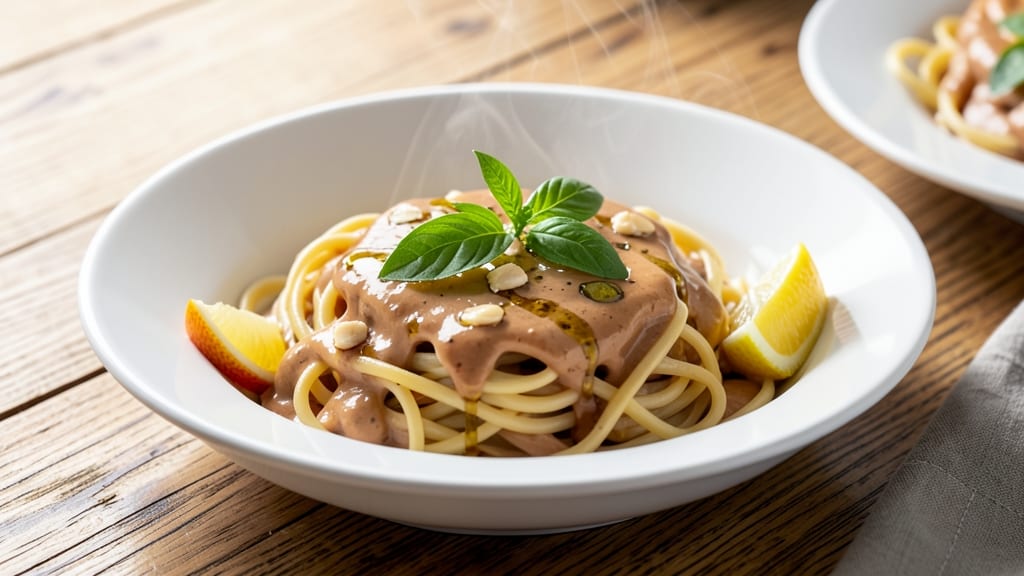
This almond pasta sauce transforms ordinary pasta into a velvety, nutty masterpiece without heavy cream or dairy. The secret lies in blending almond butter with warm almond milk and garlic until silky smooth, then simmering with herbs and a touch of lemon for brightness.
It’s the perfect balance of rich, creamy texture and clean, plant-based ingredients—ideal for those craving indulgence without guilt.
What sets this sauce apart is its versatility and ease. With just 5 simple ingredients and 15 minutes of active time, you’ll create a sauce that clings beautifully to any pasta shape, from spaghetti to penne.
The almond base adds natural sweetness and depth, while the lemon keeps it from becoming too heavy. It’s also naturally vegan, making it a crowd-pleaser for all dietary preferences.
The result is a sauce that’s creamy yet light, with a subtle nutty aroma that lingers on your palate. The best part? It reheats perfectly, so you can make a big batch and enjoy it all week.
Whether you’re tossing it with roasted vegetables or serving it alongside grilled chicken, this sauce elevates every dish it touches.
Store leftovers in an airtight container for up to 5 days in the fridge or freeze for longer shelf life. For extra richness, stir in a splash of pasta water while cooking—it’s the foolproof trick to achieving the ideal consistency every time.
Ingredients for almond pasta sauce
Five simple ingredients transform into a velvety almond sauce that rivals heavy cream.
| Ingredient | Amount | Notes |
|---|---|---|
| Creamy Almond Butter 🥜 | ½ cup | Natural, unsweetened preferred |
| Unsweetened Almond Milk 🥛 | ¾ cup | Warm before blending |
| Garlic Cloves 🧄 | 3 cloves | Freshly minced for best flavor |
| Fresh Lemon Juice 🍋 | 1 tbsp | Freshly squeezed for brightness |
| Extra-Virgin Olive Oil 🫒 | 2 tbsp | For richness and balance |
| Fresh Basil Leaves 🌿 | ¼ cup | Packed, stems removed |
| Diamond Crystal Kosher Salt 🧂 | ½ tsp | Adjust to taste |
| Ground Black Pepper 🌶️ | ¼ tsp | Freshly ground preferred |
| Nutritional Yeast 🧀 | 1 tbsp | For cheesy depth (optional) |
The almond butter is the heart of this sauce—creamy, natural, and unsweetened is key. Trader Joe's or Whole Foods carry excellent options, but any natural brand works. Warm the almond milk slightly before blending to help it emulsify smoothly. Fresh garlic cloves make all the difference here; pre-minced garlic lacks the depth. Nutritional yeast adds a cheesy note if you want extra richness, but it’s completely optional. Just ensure your basil is vibrant—yellowing leaves mean it’s past its prime.
No almond milk? Oat milk or cashew milk works equally well, though the texture may be slightly thinner. Short on fresh basil? Dried basil at one-third the amount gets you close, but fresh is ideal. The olive oil should be fruity and peppery—California or Italian varieties work best. For a smoother sauce, blend the ingredients until completely silky before simmering. If you prefer a thicker consistency, reduce the almond milk slightly or add a splash of pasta water at the end.
This sauce keeps beautifully—store in an airtight container for up to 5 days in the fridge. For longer storage, freeze in ice cube trays for single-serving portions. It reheats perfectly, so don’t hesitate to make extra. The flavor actually improves overnight as the almond notes deepen. Toss with any pasta, drizzle over roasted veggies, or use as a veggie dip—it’s that versatile.
Why You'll Love This Recipe
- Five-Ingredient Magic: I swear, this sauce comes together with just a saucepan, a whisk, and zero stress. The almond butter and milk blend into a velvety base while I chop garlic—no fancy techniques, just honest cooking.
- Garlic-Lemon Zing: That bright lemon cut through the richness, and the roasted garlic? Oh, it’s like a warm hug for your taste buds. The olive oil ties it all together with a silky finish that makes every bite feel special.
- Weeknight to Dinner Party: Same sauce, different vibes. Toss it with spaghetti for a quick weeknight meal, or drizzle it over grilled chicken for a restaurant-worthy dish. Honestly, it’s my go-to when I don’t want to overthink dinner.
- No-Waste, Budget-Friendly: The leftovers keep for days, and I’ve used them to jazz up salads, roasted veggies, or even as a dip. Plus, almond butter and milk stretch further than heavy cream—my wallet thanks me every time.
Step-by-step instructions for almond pasta sauce
Here's how to blend rich, velvety almond sauce that clings perfectly to pasta.
Warm and Whisk the Almond Base
In a medium saucepan, combine the 0.5 cup creamy almond butter and 0.75 cup unsweetened almond milk. Warm over medium-low heat for 3-4 minutes, stirring constantly until the mixture reaches 120°F—just warm enough to blend smoothly but not hot enough to cook the almond butter.
This gentle heating helps emulsify the sauce later. You'll see the almond butter melt into the milk, creating a thick, creamy foundation. If you notice any graininess, stir more vigorously—this indicates the mixture needs more time to fully incorporate.
Infuse with Garlic and Lemon Brightness
Remove the pan from heat and let it cool slightly for 1 minute. Add the 3 minced garlic cloves, 1 tablespoon fresh lemon juice, and 2 tablespoons extra-virgin olive oil. Whisk vigorously for 1 minute until the garlic is fully incorporated and the mixture is completely smooth.
The lemon juice prevents the sauce from becoming too heavy, while the olive oil adds richness that balances the nutty almond flavor. Here's the thing—don't skip the cooling step. Adding hot ingredients to cold almond butter can cause the sauce to separate.
Blend Until Silky Smooth
Transfer the mixture to a blender or food processor. Add the 0.25 cup packed fresh basil leaves, 0.5 teaspoon kosher salt, 0.25 teaspoon black pepper, and 1 tablespoon nutritional yeast. Blend on high for 45-60 seconds until completely smooth, scraping down the sides as needed.
You're aiming for a velvety texture with no visible chunks. The nutritional yeast adds a cheesy depth that pairs beautifully with the almond's natural nuttiness. If the sauce looks too thick, add 1-2 tablespoons warm water to reach your desired consistency.
Simmer for Enhanced Flavor
Return the blended sauce to the saucepan and place over low heat. Simmer gently for 5-7 minutes, stirring occasionally, until the sauce reaches 160°F. This slow cooking allows the flavors to meld together while maintaining the sauce's creamy texture.
Taste and adjust seasoning—you might need a pinch more salt or pepper depending on your pasta. The sauce should coat the back of a spoon but remain pourable. If it thickens too much during simmering, thin with a splash of warm almond milk.
Finish and Serve
Remove from heat and let the sauce rest for 2 minutes to fully set. Toss immediately with cooked pasta, adding 2-3 tablespoons pasta water as needed to achieve the perfect clinging consistency. The sauce should coat each strand beautifully without making the pasta soggy.
For best results, serve immediately while the sauce is still warm. The almond flavor will be most pronounced, and the basil will release its aromatic oils. This sauce pairs perfectly with whole wheat pasta or gluten-free noodles for a protein-rich, dairy-free option.
Pro Tips For Making Almond Pasta Sauce
- STIR CONSTANTLY AT FIRST: The moment you mix almond butter and almond milk, grab that whisk and don’t let up for 30 seconds—no matter how stubborn it gets. I learned this the hard way when my sauce turned into lumpy almond paste; the fat in almond butter resists emulsification like a stubborn toddler. Keep the heat low until it smooths out, then you can ease up.
- TOAST THE GARLIC: Sauté those garlic cloves in olive oil until they’re golden and just starting to crisp at the edges—about 1-2 minutes longer than you’d normally dare. This adds depth that raw garlic can’t match, and it prevents that bitter aftertaste from overcooking later. Yes, it’s easy to burn, but a quick eye keeps it perfect.
- LEMON JUICE LAST: Add the lemon juice after the sauce has thickened and cooled slightly—never at the start. I used to rush it, and the sauce would curdle like a science experiment gone wrong. Wait until the mixture is warm but not hot, then drizzle it in while stirring. The acidity brightens the flavor without turning your sauce into almond milk pudding.
- SALT THE ALMOND BUTTER: Taste that almond butter before you even start—if it’s bland, add a pinch of salt right to it. Unsalted almond butter is a common trap, and your sauce will taste flat if you rely on the almond milk or lemon to fix it. A quarter teaspoon in the butter makes a real difference, trust me.
Make-ahead tips for leftovers
Batch Prep Strategy
Make a double batch and store the sauce in glass jars or BPA-free plastic containers—I love the Leviton 16-ounce jars for portion control. Divide into 2-cup servings so you can grab exactly what you need without thawing or measuring later.
The sauce actually tastes better the next day as the almond flavors deepen and meld. 💛
Freezer-Friendly Tips
For long-term storage, freeze the sauce in ice cube trays—each cube makes a perfect single-serving portion. Once frozen, transfer cubes to a ziplock bag and flatten to save space.
When ready to use, thaw overnight in the fridge or microwave for 30 seconds on 50% power. Stir in 1 teaspoon warm water to restore creaminess.
Pasta Water Hack
Before tossing with pasta, add 2-3 tablespoons pasta water to your sauce. This starchy liquid helps the sauce cling better to the noodles without making them soggy. For extra richness, reserve ½ cup pasta water when cooking—it’s liquid gold for adjusting sauce consistency later. 🌟
Make-Ahead Meal Prep
Prep your pasta separately and store it in the fridge for up to 3 days in a damp paper towel-lined container to prevent drying. When ready to serve, reheat the sauce and pasta separately, then toss with 1 tablespoon reserved pasta water.
This keeps the texture perfect every time—no mushy noodles here!
Flavor Boost Storage
If your sauce loses brightness after refrigeration, revive it by adding ½ teaspoon lemon zest or a splash of fresh lemon juice before reheating. For extra depth, stir in 1 teaspoon minced garlic or a pinch of red pepper flakes to wake up the flavors.
The sauce reheats beautifully on the stovetop over medium-low heat for 3-4 minutes.
Portion Control
Use ¼ cup sauce per serving as a guideline—this ensures you don’t overdo it while still getting that rich, creamy coating. For a lighter option, reduce to 2 tablespoons per serving and drizzle with extra olive oil or fresh herbs.
The sauce also works as a dip for roasted veggies or grilled chicken, so
Nutrition facts
Frequently asked questions
Can I use roasted almonds instead of almond butter for this sauce?
Yes, but you'll need to toast and blend them first! Roast ½ cup whole almonds at 350°F for 8-10 minutes, then blend with ½ cup warm water until completely smooth. This creates a fresh almond base that's even lighter than store-bought butter. The texture will be slightly thinner, so simmer longer to thicken.
How do I make this sauce thicker or thinner?
For thicker sauce, simmer uncovered for 2-3 extra minutes or stir in 1 teaspoon cornstarch mixed with 1 tablespoon water. Need it thinner? Add 1 tablespoon warm almond milk at a time until it reaches your desired consistency. The key is gradual adjustments—don't overdo it at once!
What's the best pasta to pair with this almond sauce?
This sauce clings beautifully to fettuccine, linguine, or penne due to their ridges. For extra texture contrast, try whole wheat or chickpea pasta. Avoid delicate shapes like angel hair—the sauce may make them too soft. Pro tip: Cook pasta 1 minute less than package instructions for the best texture when tossed.
Can I make this sauce without a blender?
Use a hand mixer or whisk vigorously for 5 minutes until completely smooth. For the best results, strain through a fine-mesh sieve to remove any remaining basil fibers. The texture will be slightly less velvety but still delicious. Just be patient—this method requires more elbow grease!
Why did my sauce separate when I reheated it?
This usually happens when the sauce cools too quickly or gets too hot. To fix it, whisk in 1 tablespoon warm almond milk and reheat over low heat while stirring constantly. For prevention, always reheat on low-medium heat and avoid boiling. The sauce should never exceed 170°F**—gentle heat is key!